Die-Cast Aluminum LED Housing: The Complete Buyer’s Guide
What Is Die-Cast Aluminum LED Housing?
Die-cast aluminum LED housing is manufactured by forcing molten aluminum under high pressure into precision steel molds. The result is a lightweight, structurally complex enclosure with exceptional dimensional accuracy — making it the preferred choice for commercial LED lighting across street lights, industrial high-bays, and architectural installations.
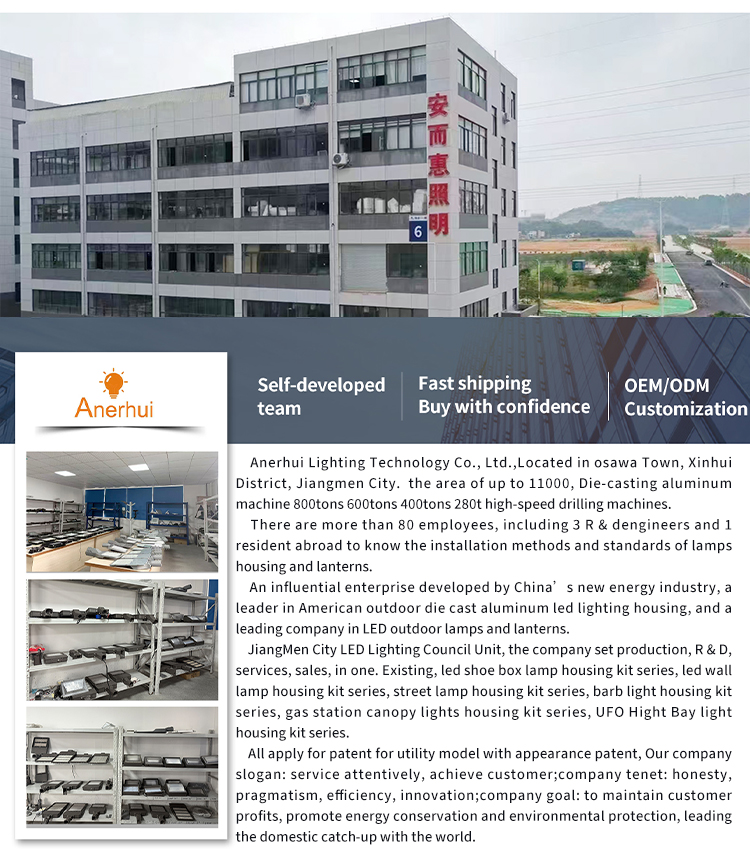
For B2B buyers, the choice of housing material directly affects product lifespan, thermal performance, and total cost of ownership. This guide — produced by Anerhui Lighting — covers everything you need to know before sourcing aluminum LED housings at scale.
5 Key Advantages of Die-Cast Aluminum LED Housings
1. Superior Thermal Management
Heat is the primary enemy of LED longevity. LEDs convert only ~40% of electrical energy into light — the rest becomes heat. Without effective dissipation, LED junction temperatures rise, causing lumen depreciation and premature failure.
Why aluminum wins:
- Thermal conductivity: 180–220 W/m·K
- ~5× more effective than die-cast zinc
- ~15× more effective than plastic
Quality heat dissipation LED housings use integrated fin arrays and precision-machined mounting surfaces to achieve thermal contact resistance below 0.5°C·cm²/W — enabling 50,000+ hour lifespans at 70% lumen maintenance.
2. Weatherproof and Durable Outdoors
Outdoor LED fixtures face rain, salt spray, UV exposure, and temperature swings. Die-cast aluminum LED housing handles all of it.
- IP65/IP66/IP67 ratings achieved through precision-machined flanges and silicone gasket systems
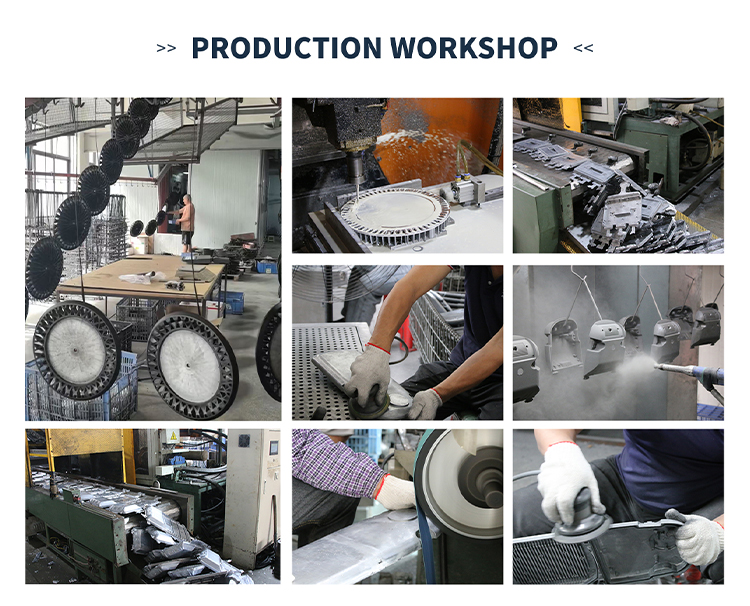
- 1,000+ hours salt spray resistance (ASTM B117) via multi-stage surface treatment: conversion coating → electrophoretic primer → powder coat
- IK08–IK10 impact ratings for public spaces, parking structures, and high-traffic areas
Wall thickness typically ranges from 1.5mm to 6mm, providing optimal strength-to-weight ratios for outdoor waterproof LED housing designs.
3. Design Flexibility for Custom LED Light Bodies
Unlike extrusion, die casting produces complex 3D geometries in a single operation. This enables:
- Integrated mounting brackets (eliminating separate hardware)
- Concealed internal wiring channels
- Snap-fit assembly features
- Multi-cavity tooling for simultaneous production of multiple parts
For buyers requiring custom LED light body components, suppliers like Anerhui Lighting can accommodate regional mounting standards, certification markings, and dimensional adjustments through tooling modifications — without full new tooling investment.
4. High-Volume Cost Efficiency
Die casting delivers the lowest per-unit cost for complex aluminum components at medium-to-high volumes.
| Factor | Detail |
|---|---|
| Tooling cost range | $15,000 – $80,000+ |
| Die lifespan | 100,000+ shots |
| Material cost share | 15–25% of total unit cost |
| Cost reduction vs. fabrication | 20–40% savings |
No secondary machining is required for most applications, reducing lead time and work-in-progress inventory. Consistent tolerances also enable automated assembly, cutting labor costs further.
5. Wide Application Range
Die-cast aluminum LED light accessories serve virtually every commercial lighting segment:
- Street & roadway lighting — rated for –40°C to +50°C thermal cycling and wind loads over 150 km/h
- Industrial high-bay / low-bay — extended heat sink arrays for elevated ambient temperatures
- Architectural & facade lighting — slim profiles with precise optical mounting surfaces
- Sports venue lighting — reinforced mounting provisions and aerodynamic housings for tall pole installations
How to Evaluate Die-Cast Aluminum LED Housing Suppliers
Not all die casting suppliers are equal. Use this checklist when qualifying partners:
Manufacturing capability
- Machine tonnage: 280–1,000 tons for standard LED housings
- In-house CNC machining, surface treatment, and assembly
- Vacuum-assisted or squeeze casting to minimize porosity
Quality certifications
- ISO 9001 quality management (minimum)
- IATF 16949 (automotive-grade, signals higher process discipline)
- Third-party IP rating and thermal performance verification
Technical support
- Design-for-manufacturing (DFM) review participation
- Thermal modeling capability
- Engineering support for new product development
Logistics readiness
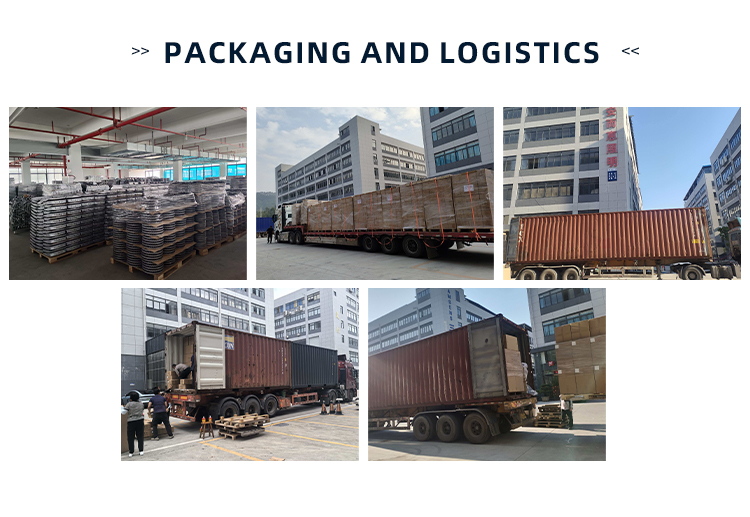
- Experience with container shipments and export documentation
- Lead time reliability across production and transit phases
Frequently Asked Questions
What IP rating can die-cast aluminum LED housings achieve?
With precision-machined sealing surfaces and silicone gaskets, IP65, IP66, and IP67 ratings are all achievable.
What’s the minimum order volume where die casting becomes cost-effective?
Tooling investment is amortized most efficiently at 10,000+ units annually. Below this threshold, buyers may consider alternative processes.
How long do aluminum die-cast LED housings last?
With proper thermal design, 50,000+ operational hours at 70% lumen maintenance (L70) is standard for quality products.
Can die-cast housings be customized for different markets?
Yes. Regional mounting standards, voltage markings, and certification logos can typically be added through tooling modifications rather than entirely new dies.
Summary
Die-cast aluminum LED housing is the optimal choice for commercial lighting products that demand thermal performance, weather resistance, and production scalability. Whether you’re sourcing components for street lights, industrial warehouses, or architectural facade systems, aluminum die casting delivers the consistency and cost efficiency that competitive lighting markets require.
Establishing relationships with capable die casting suppliers early — especially those like Anerhui Lighting offering DFM support and in-house surface treatment — positions buyers for faster product development cycles and stronger margins as the LED lighting market continues to evolve.