
By Anerhui Engineering Team | Last updated: Jan 2026 | smart LED housing design IoT LED housing DALI-2 Zhaga Book 18 die-cast aluminum connected lighting
📋 Table of Contents
- What Is Smart LED Housing Design?
- Why Die-Cast Aluminum Is the Foundation of Smart LED Housings
- Key Protocols: DALI-2, Zhaga Book 18, NFC & Bluetooth
- Sensor Integration Without Compromising IP Ratings
- Smart Housing Design by Product Type
- Top Commercial Applications for Smart LED Housings
- How to Source Smart-Ready LED Light Bodies
- ROI Calculator: Smart vs Standard LED Housings
- Standards & Certifications for Smart LED Fixtures
- Frequently Asked Questions
The global smart lighting market is projected to surpass $38 billion by 2028, driven by building automation mandates, energy efficiency regulations, and the rapid maturation of IoT infrastructure in commercial facilities. At the heart of every smart luminaire is the one component that makes intelligence possible without sacrificing durability: the smart LED housing.
For commercial lighting manufacturers and B2B procurement teams, specifying the right smart LED housing design means more than selecting a control protocol. It requires understanding how die-cast aluminum LED housing construction enables IoT sensor integration, how Zhaga and DALI-2 standards shape physical enclosure geometry, and how to evaluate suppliers capable of delivering sensor-ready light bodies at commercial scale.
This guide covers everything you need to know — from protocol selection and antenna window design to product-specific applications and sourcing considerations. For foundational knowledge on aluminum die casting for LED housings, see our complete die-cast aluminum LED housing guide. Standards referenced throughout are published by the International Electrotechnical Commission (IEC) and the Zhaga Consortium.

1. What Is Smart LED Housing Design?
Smart LED housing design refers to the engineering of die-cast aluminum luminaire enclosures that go beyond passive thermal and structural functions to actively support connected lighting ecosystems. A smart-designed LED housing integrates one or more of the following capabilities into the physical enclosure:
- Sensor compartments: Sealed internal or external cavities sized to accommodate PIR occupancy sensors, daylight photocells, ambient temperature probes, or air quality monitors.
- Wireless antenna windows: RF-transparent polycarbonate or glass inserts cast into the aluminum shell to allow Bluetooth, Zigbee, LoRaWAN, or NFC signals to pass without compromising structural integrity.
- Zhaga Book 18 sockets: Standardized outdoor connector interfaces that allow plug-and-play installation and replacement of smart nodes without tools.
- Driver access panels: Removable sealed compartments that allow in-field replacement or upgrade of smart drivers, DALI-2 controllers, or emergency battery packs.
- Integrated cable management: Pre-formed channels routing sensor, driver, and communication wiring without compromising IP-rated seals at enclosure joints.
The critical insight is that smart functionality cannot be retrofitted into a conventional housing as an afterthought — it must be designed into the die-casting mold from the outset. This is why experienced LED light housing manufacturers with in-house tooling capability are the only reliable source for genuinely smart-ready LED light bodies.
Key distinction: A housing with a sensor attached externally is not a smart housing design — it is a standard housing with an accessory. True smart LED housing design means the sensor interface, wiring path, and sealing system are all integral to the die-cast enclosure geometry.
2. Why Die-Cast Aluminum Is the Foundation of Smart LED Housings
Adding intelligence to a LED fixture creates new engineering constraints: sensors generate additional heat, wireless modules are sensitive to electromagnetic interference, and sealed compartments must remain accessible for maintenance. Die-cast aluminum addresses each of these challenges in ways that no alternative material can match.
| Challenge | How Die-Cast Aluminum Solves It |
|---|---|
| Sensor & driver heat management | 150–210 W/(m·K) thermal conductivity draws heat away from both LEDs and electronic control modules simultaneously via shared heat sink geometry |
| EMI shielding for wireless modules | Aluminum enclosure provides natural Faraday cage shielding; localized antenna windows in polycarbonate allow selective RF transmission without full-housing compromise |
| IP65–IP67 with sensor penetrations | Precision-machined gasket surfaces and sealed gland fittings maintain ingress protection at all cable and sensor entry points |
| Complex internal geometry | Die casting at ±0.03–0.05 mm tolerance produces Zhaga socket recesses, cable channels, and driver bays in a single part — impossible with extrusion or sheet metal |
| Long service life for IoT infrastructure | 25+ year aluminum housing lifespan aligns with smart city infrastructure investment cycles; no UV degradation unlike polymer alternatives |
| Scalability for large deployments | High-pressure die casting produces thousands of geometrically identical housings per month, ensuring interchangeable sensor fitment across entire lighting networks |
For a detailed comparison of aluminum versus alternative materials for LED housing construction, see our LED component materials comparison guide. For thermal management specifics, our heat dissipation LED housing guide covers junction temperature modeling in detail.
3. Key Protocols: DALI-2, Zhaga Book 18, NFC & Bluetooth Mesh
The choice of control protocol directly determines the physical requirements of the housing design. Understanding each standard helps procurement teams specify the right housing geometry before tooling is committed.
DALI-2 (IEC 62386) — Digital Addressable Lighting Interface
DALI-2 is the industry’s most mature standardized protocol for digital lighting control, defined by IEC 62386 and maintained by the DALI Alliance. Unlike analog 0–10V dimming, DALI-2 provides bi-directional communication — the fixture can report its own status, energy consumption, and fault conditions back to the building management system (BMS). Housing design implications include routed two-wire bus wiring channels and accessible driver compartments for DALI-2 certified gear.
Zhaga Book 18 — Plug-and-Play Outdoor Sensor Interface
The Zhaga Book 18 standard defines a standardized outdoor luminaire interface (OLI) for smart sensors and wireless nodes. A housing incorporating a Zhaga Book 18 socket allows any compliant sensor node — PIR, photocell, NFC reader, or wireless communication module — to be plugged in and replaced without tools or rewiring. This is the most important architectural decision in smart housing design for outdoor commercial applications, as it future-proofs fixtures against rapidly evolving sensor technology.
NFC (Near-Field Communication) — Tool-Free Configuration
NFC integration in LED housings enables installers and facility managers to configure luminaire parameters — set points, dimming curves, schedules, group addresses — using a smartphone held within 4 cm of the housing, without any physical access to the driver. Housing design must include a localized NFC antenna window (typically 30–50 mm diameter polycarbonate insert) positioned on a visible face of the enclosure for practical field access.
Bluetooth Mesh & Zigbee — Wireless Mesh Networks
For large-scale deployments such as parking lots, warehouse floors, or campus street lighting, Bluetooth Mesh (IEEE 802.15.1) and Zigbee (IEEE 802.15.4) enable self-healing mesh networks where each fixture acts as a node. Die-cast aluminum housings accommodate these modules through dedicated internal cavities with antenna windows, maintaining IP ratings while enabling wireless range of 30–100 meters per node. The Connectivity Standards Alliance (CSA) governs both Zigbee and Matter protocol certifications.
| Protocol | Range | Housing Design Requirement | Best Application |
|---|---|---|---|
| DALI-2 | 300 m (wired bus) | Routed 2-wire bus channel, accessible driver bay | Office, retail, indoor commercial |
| Zhaga Book 18 | Protocol-agnostic | 5-pin socket recess, IP66 socket cap | Outdoor street, parking, area lighting |
| NFC | ≤4 cm (configuration) | 30–50 mm antenna window, accessible face | Any fixture needing tool-free setup |
| Bluetooth Mesh | 30–100 m per node | Internal module cavity + antenna window | Warehouse high bay, large indoor areas |
| Zigbee / Matter | 10–100 m per node | Internal module cavity + antenna window | Smart city, campus, large outdoor networks |
| LoRaWAN | 2–15 km | External antenna port with sealed gland | Street lighting, remote area monitoring |
4. Sensor Integration Without Compromising IP Ratings
The most technically demanding aspect of smart LED housing design is maintaining IP65–IP67 ingress protection while accommodating the cable penetrations, sensor windows, and access panels that connected luminaires require. The following engineering approaches, used in Anerhui’s smart-ready housing designs, solve this challenge systematically.

Sealed Gland Fittings for Sensor Wiring
All external sensor cable entries use IP68-rated M-series PG cable glands, mated to machined boss features cast directly into the housing. The boss geometry ensures consistent thread engagement depth and gasket compression, maintaining seal integrity across the full temperature cycling range of outdoor luminaires (-40°C to +70°C). For smart housings with multiple sensor inputs, multi-port gland assemblies consolidate penetrations to minimize potential ingress points.
RF Antenna Windows
Aluminum is an excellent conductor and therefore blocks radio frequency signals — a challenge for any wireless-enabled housing. The solution is a localized antenna window: a precisely sized aperture in the aluminum shell filled with a cast-in polycarbonate or borosilicate glass insert, UV-stabilized and sealed with structural adhesive to maintain IP integrity. Window dimensions are calculated based on the wavelength of the target frequency: Bluetooth (2.4 GHz) requires a window of approximately 60 × 30 mm, while LoRaWAN (868/915 MHz) needs a larger aperture. Our engineering team provides antenna window simulation data as part of the DFM review process.
Zhaga Socket IP Caps
Housings with Zhaga Book 18 sockets ship with IP66-rated protective caps installed at the socket position. When a smart node is installed, the cap is replaced by the node’s own IP-rated body, which seals against the socket’s silicone gasket. This design maintains IP66 protection whether or not a smart node is populated — critical for commercial projects where smart sensor rollout may be phased over time.
Design tip for procurement teams: When requesting smart LED housings, always specify whether the Zhaga socket should be pre-populated (with sensor node installed) or socket-only (cap installed, sensor added later). Socket-only configurations allow buyers to defer sensor procurement costs while maintaining housing design flexibility. Contact Anerhui’s engineering team to discuss phased smart deployment configurations.
5. Smart Housing Design by Product Type
Smart LED housing requirements vary significantly by luminaire type. The following section covers the design specifics for each of Anerhui’s core product categories.
Smart UFO LED High Bay Housing
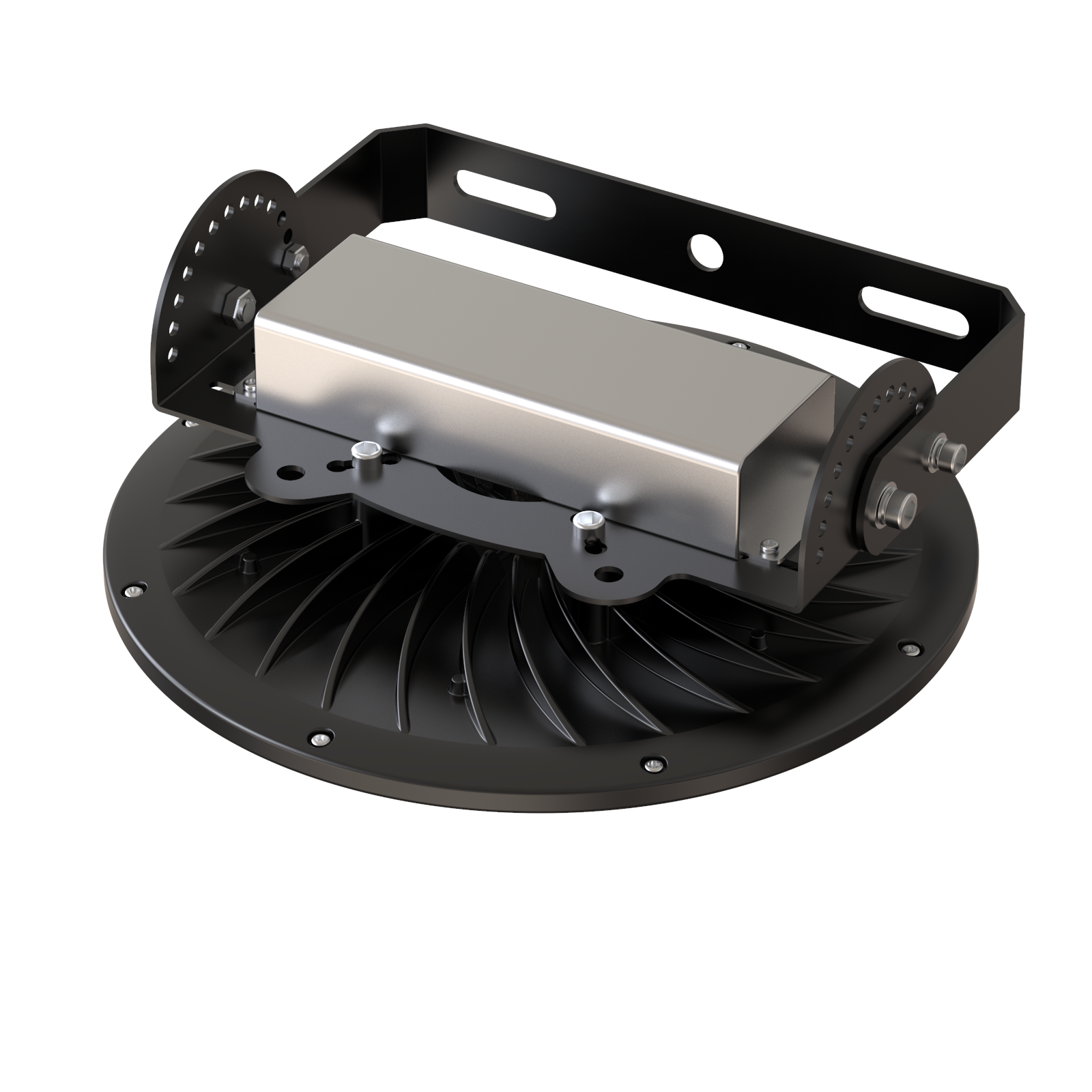
UFO high bay fixtures are the highest-ROI application for smart lighting in commercial facilities. A Zhaga Book 18 socket positioned at the top center of the UFO housing (opposite the heat sink fins) provides a 360° field of view for PIR occupancy sensors, maximizing detection coverage in high-ceiling aisles and bays. DALI-2 drivers within the sealed central driver compartment respond to occupancy events within 500 ms for near-instant dimming. Anerhui’s LED high bay housing range is available with pre-cast Zhaga sockets on all Series 4 and Series 5 models.
Smart LED Street Light Housing
Outdoor street lighting represents the largest deployed base for smart LED infrastructure globally. LED street light housings for smart applications incorporate NEMA or Zhaga photocell sockets at the top of the housing, allowing plug-and-play installation of wireless control nodes from suppliers including Telensa, Echelon, and Tvilight. LoRaWAN external antenna ports with sealed SMA connectors enable connection to city-wide smart lighting networks. See our LED housing surface treatments guide for corrosion protection options for smart street light housings in coastal and high-humidity environments.
Smart LED Canopy Light Housing
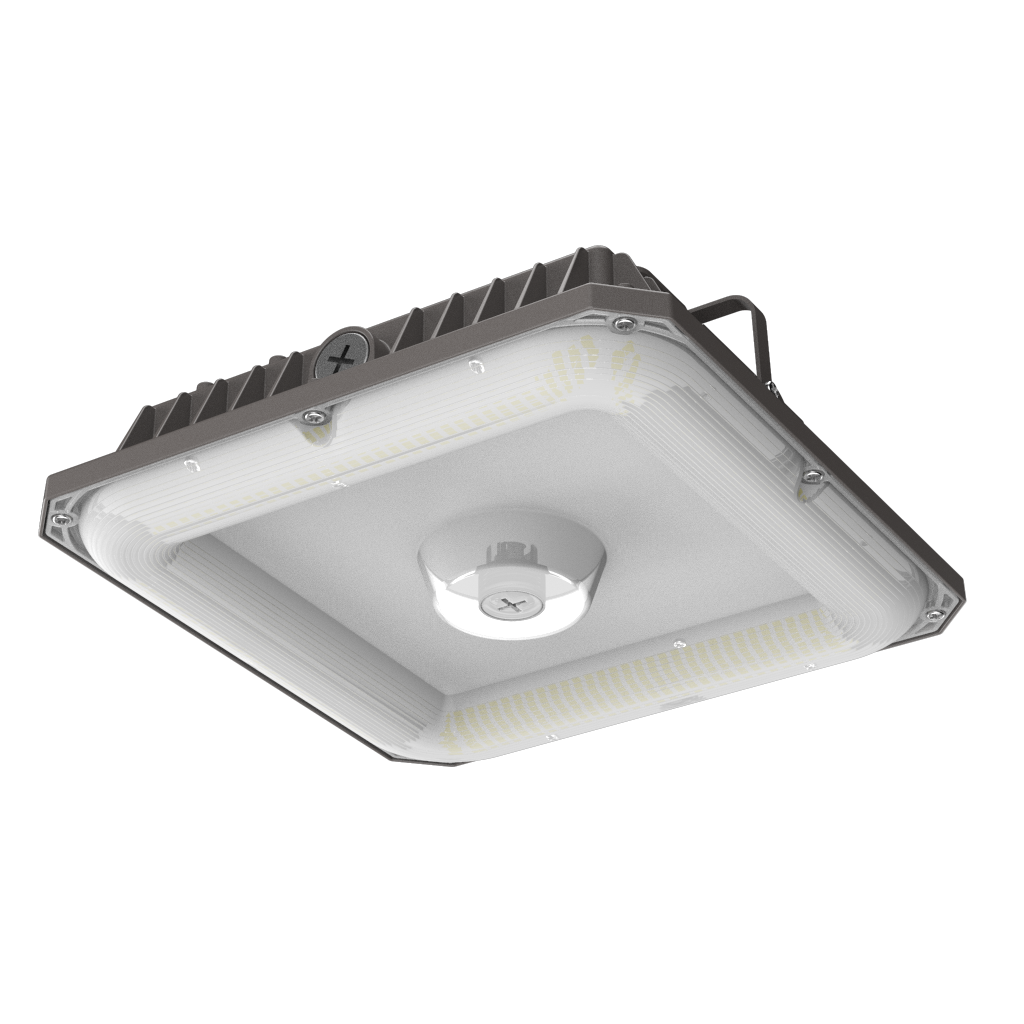
Gas station, drive-through, and covered parking canopy fixtures operate in one of the most demanding environments for smart electronics: high moisture, fuel vapor, vibration, and temperature cycling. Anerhui’s canopy light housings for smart applications use fully welded perimeter gaskets with compression-limiter inserts to maintain consistent seal force across thermal cycles. Occupancy sensing in canopy applications enables 50–70% energy reduction during low-traffic overnight hours, with instant full-brightness restore on vehicle approach. Explore our full LED canopy light housing range.
Smart LED Wall Pack Housing
Wall pack fixtures for building perimeters and parking structures benefit from smart design through integrated passive infrared (PIR) sensors providing security-linked dimming: fixtures maintain 20% output during unoccupied periods and switch to 100% on motion detection, deterring trespassing while reducing energy consumption by up to 60%. Die-cast aluminum wall pack housings incorporate forward-facing sensor windows angled downward at 15° to optimize PIR detection geometry for pedestrian-level motion. View Anerhui’s LED wall pack housing range.
6. Top Commercial Applications for Smart LED Housings
| Application | Recommended Housing Type | Smart Features | Typical Energy Saving |
|---|---|---|---|
| Warehouse / Logistics (high-ceiling) | UFO High Bay | PIR occupancy, Bluetooth Mesh dimming, DALI-2 | 40–65% vs non-smart LED |
| Outdoor Parking Lot | Shoebox / Street Light | Photocell, Zhaga node, LoRaWAN, daylight harvesting | 50–70% |
| Gas Station / Canopy | Canopy Light | Occupancy sensor, remote monitoring, energy reporting | 45–60% |
| Building Perimeter / Security | Wall Pack | PIR motion dimming, NFC configuration, 0–10V or DALI-2 | 50–65% |
| Smart City Street Lighting | Street Light Housing | LoRaWAN, Zhaga Book 18, centralized management platform | 55–75% |
| Industrial / Manufacturing | UFO High Bay / Shop Light | Task-based occupancy, Zigbee mesh, emergency backup | 35–55% |
For a comprehensive breakdown of housing requirements by industrial application, see our industrial LED housing solutions guide. For architectural and facade applications, refer to our architectural LED housing gallery.
7. How to Source Smart-Ready LED Light Bodies: Supplier Checklist
Sourcing smart LED housings requires evaluating capabilities that standard housing suppliers may not possess. Use the following checklist when qualifying potential LED light housing manufacturers for smart-ready products.
Tooling & Design Capability
- In-house mold design with experience in Zhaga Book 18 socket geometry
- Antenna window design and RF simulation capability
- DFM review that includes sensor compartment fitment verification
- Mold flow simulation to ensure fill integrity around internal cavities and windows
Protocol Expertise
- Demonstrated production experience with DALI-2 driver integration
- Zhaga-compliant socket tooling already developed (reduces tooling lead time)
- Ability to source or co-specify compatible smart nodes from certified vendors
IP Testing for Smart Configurations
- IP testing performed on assembled smart configurations (sensor installed), not housing alone
- IEC 60529 third-party test reports available for IP65 and IP66 ratings
- Thermal cycling test reports (-40°C to +70°C) confirming seal integrity
Production Scalability
- Capacity to produce smart housing variants alongside standard variants on same tooling
- MOQ flexibility for initial smart product rollouts (typically 500–1,000 units)
- Blanket order capability for large smart city or campus deployments (10,000+ units)
Supplier audit resource: Download our LED housing supplier audit guide for a complete scorecard covering smart-specific capabilities including Zhaga tooling, antenna window design, and IP testing documentation requirements.
8. ROI Calculator: Smart vs Standard LED Housings for a 500-Fixture Warehouse
The business case for smart LED housing investment is compelling across virtually all commercial facility types. The following model compares a standard LED high-bay installation against a smart (Bluetooth Mesh + PIR occupancy) installation over five years for a 500-fixture logistics warehouse operating 20 hours/day.
| Cost Factor | Standard LED High Bay (500 fixtures) | Smart LED High Bay (500 fixtures) |
|---|---|---|
| Housing unit cost | $14.00 | $19.50 (Zhaga socket + antenna window) |
| Smart node cost (Zhaga Book 18) | — | $12.00 per fixture |
| Total fixture hardware (500 pcs) | $7,000 | $15,750 |
| Annual energy consumption (200W, $0.12/kWh) | $87,600 | $35,040 (60% avg occupancy dimming) |
| 5-year energy cost | $438,000 | $175,200 |
| Maintenance & replacement (5yr) | $8,500 | $4,200 (remote fault detection) |
| 5-Year Total Cost | $453,500 | $195,150 |
| 5-Year Saving with Smart | $258,350 (57% reduction) — smart payback in ~13 months | |
For volume orders of smart LED housings (2,000+ units), Anerhui offers consolidated pricing on housing + Zhaga socket tooling. Request a custom quote →
9. Standards & Certifications for Smart LED Fixtures
| Standard | Scope | Relevance to Smart Housing |
|---|---|---|
| IEC 62386 (DALI-2) | Digital addressable lighting interface | Driver compartment design, bus wiring routing |
| Zhaga Book 18 | Outdoor luminaire smart interface | Socket recess geometry, IP66 cap requirement |
| IEC 60529 | IP ingress protection ratings | Must be tested in fully assembled smart configuration |
| FCC Part 15 / CE RED | Radio equipment directive | Antenna window design affects RF emissions compliance |
| UL 8750 / UL 1598 | LED equipment / luminaire safety | Smart driver and sensor integration must not compromise UL listing |
| IEEE 802.15.4 (Zigbee/Matter) | Wireless mesh protocol | Antenna window sizing for 2.4 GHz band |
| RoHS / REACH | Substance restrictions | All housing materials including antenna window inserts must comply |
Anerhui supplies smart LED housings with full material declarations (IPC-1752A format) and supports customers through CE, FCC, and UL certification processes. All smart housing variants are available with third-party IP test reports. Contact our technical team for certification documentation.
10. Frequently Asked Questions About Smart LED Housing Design
What is smart LED housing design?
Smart LED housing design refers to die-cast aluminum luminaire enclosures engineered to accommodate IoT sensors, wireless communication modules (DALI-2, Zhaga Book 18, NFC, Bluetooth), and smart drivers within protected, accessible compartments. These housings enable remote dimming, occupancy sensing, energy monitoring, and predictive maintenance without compromising IP65–IP67 weatherproofing.
What is the difference between DALI-2 and Zhaga in LED housing design?
DALI-2 (IEC 62386) is a digital control protocol for LED drivers enabling bi-directional communication and individual fixture addressing. Zhaga Book 18 is a physical connector standard defining the mechanical interface for plug-and-play smart sensors. A smart LED housing can support both: the Zhaga socket provides the hardware interface for plug-in sensor nodes, while the DALI-2 bus carries control signals between the driver and the building management system.
Can die-cast aluminum housings achieve IP65 or higher with integrated smart sensors?
Yes. Die-cast aluminum smart LED housings maintain IP65–IP67 ratings by routing sensor wiring through sealed gland fittings and enclosing wireless antenna elements behind RF-transparent polycarbonate windows cast into the housing. Zhaga Book 18 sockets include IP66-rated protective caps when no sensor node is installed. All configurations should be IP-tested in their fully assembled state.
What aluminum alloy is best for smart LED housing die casting?
ADC12 (equivalent to A383) is widely preferred for smart LED housings due to its superior die-filling fluidity, which allows casting of the thin walls, sensor compartments, cable channels, and Zhaga socket recesses needed in complex smart designs. For high-power fixtures (150W+) combining thermal and smart requirements, A413 alloy offers higher thermal conductivity alongside excellent fluidity.
What is a Zhaga Book 18 socket and why does it matter?
Zhaga Book 18 defines a standardized outdoor luminaire interface allowing plug-and-play installation of smart sensor nodes — PIR, daylight, temperature, wireless — into a pre-designed socket on the housing. Housings with an integrated Zhaga socket let buyers upgrade any fixture from basic LED to full smart-connected operation at any future date, without replacing the housing or rewiring the fixture. This is the most important future-proofing feature in outdoor smart LED housing design.
Which commercial applications benefit most from smart LED housing design?
The highest ROI applications are large warehouses and logistics centers using UFO high-bay fixtures with occupancy sensing (40–65% additional energy savings), outdoor parking lots with daylight harvesting and wireless control (50–70% savings), gas station canopies with remote health monitoring (45–60% savings), and building perimeter wall packs with security-linked PIR dimming (50–65% savings).
What is the minimum order quantity for custom smart LED housings with Zhaga sockets?
Anerhui’s MOQ for smart LED housings with custom Zhaga socket integration starts at 500 units for existing tooling adaptations and 1,000–2,000 units for new custom mold development. For large smart city or campus deployments (10,000+ units), blanket order pricing and priority production scheduling are available. Contact us for a custom quote →
Conclusion
Smart LED housing design is no longer a niche premium feature — it is the baseline requirement for any commercial lighting project targeting modern energy management standards, building automation integration, or smart city deployment. The convergence of DALI-2 control, Zhaga Book 18 sensor interfaces, and wireless mesh protocols has created a new engineering discipline that demands purpose-built die-cast aluminum enclosures, not afterthought adaptations of conventional housings.
For B2B buyers and lighting manufacturers, the key takeaway is this: specify smart housing geometry before selecting components. The physical enclosure — its sensor compartments, antenna windows, driver bays, and IP-sealed interfaces — determines what smart technology can be deployed, upgraded, and maintained over the luminaire’s 25-year service life.
Anerhui has engineered smart-ready die-cast aluminum housings across the full commercial luminaire product range — from UFO high bays and street lights to canopy fixtures and wall packs. Our in-house tooling capability, Zhaga socket expertise, and RF simulation services make us the ideal manufacturing partner for smart lighting projects at any scale.
Ready to specify smart LED housings for your next project? Request a free sample, explore our complete product catalog, or contact our engineering team for a smart housing DFM consultation.
References & Further Reading
- International Electrotechnical Commission (IEC) — IEC 62386 DALI-2, IEC 60529 IP Ratings
- Zhaga Consortium — Book 18 Outdoor Luminaire Interface Standard
- DALI Alliance — DALI-2 certification and product database
- Connectivity Standards Alliance (CSA) — Zigbee and Matter protocol certifications
- U.S. DOE — Connected Lighting Systems
- Anerhui: Die-Cast Aluminum LED Housing Complete Guide (internal)
- Anerhui: Heat Dissipation LED Housing Guide (internal)
- Anerhui: LED Housing Supplier Audit Guide (internal)
© 2026 Anerhui Lighting Technology Co., Ltd. All rights reserved. | Privacy Policy | Sitemap | Blog
This article is reviewed and updated to reflect current smart lighting standards and Anerhui product developments.