Walk into any commercial lighting factory and you’ll find the same debate happening: which housing material actually delivers over a 10-year product lifecycle, and which one just looks good on a spec sheet?
The answer, in most cases, is die cast aluminum. But not all aluminum die casting is equal — and the differences matter more than most buyers realize when they’re comparing quotes.
This guide explains what to look for, what to ask, and where things typically go wrong.
Why the Housing Material Matters More Than You Think
An LED fixture is only as good as its weakest thermal link. LEDs convert roughly 40% of electrical energy into light. The remaining 60% becomes heat — and that heat needs somewhere to go.
If it doesn’t move fast enough, junction temperatures rise. Lumen output drops. Color shifts. The fixture that was rated for 50,000 hours starts failing at 20,000.
The housing is the primary path that heat travels. Which means the material, the geometry, and the manufacturing quality of the housing directly determine whether your product delivers on its rated lifespan — or quietly underperforms in the field.
What Is Aluminum Die Casting, and Why Does It Dominate LED Housing?
Aluminum pressure die casting is a manufacturing process where molten aluminum is injected into a precision steel mold under high pressure — typically 700 to 1,200 bar. The result is a dense, accurately dimensioned component that can be produced in high volumes with very consistent output.
The alternative processes — extrusion, sheet metal fabrication, gravity casting — each have their place. But for LED housings that need to manage heat, seal out weather, and hold precise optical tolerances all at once, aluminum high pressure die casting hits a combination of properties that’s hard to match.
A few reasons why:
Wall thickness down to 1mm. Thin walls mean less material and lower weight, without losing structural rigidity. For pole-mounted or ceiling-installed fixtures, this matters for both shipping cost and installation ease.
Complex geometry in a single shot. Heat sink fins, mounting provisions, wire management channels, driver compartment features — all of these can be cast in as part of the housing rather than added as separate components. Fewer parts means fewer failure points and faster assembly.
Surface finish suitable for precision sealing. IP-rated fixtures need sealing grooves machined to consistent tolerances. Die-cast surfaces hold those tolerances across production runs in a way that sheet metal assemblies typically don’t.
Alloy Selection: The Detail Most Buyers Skip
When comparing aluminum die casting companies, alloy specification is one of the first things worth asking about — and one of the least discussed in standard procurement conversations.
The two most common aluminum die casting alloys for LED housing applications are ADC12 (equivalent to A383) and A380. On paper, their thermal conductivity specs are close. In practice, the differences that matter most aren’t in the alloy itself — they’re in how consistently the supplier controls porosity and alloy composition across batches.
Porosity is the enemy of both thermal performance and IP integrity. A housing with excessive internal voids conducts heat unevenly and can fail pressure testing even with a good gasket design. Reputable aluminum die casting manufacturers control this through vacuum-assisted casting, squeeze casting, or careful process monitoring — and should be able to provide material certifications on request.
If a supplier can’t tell you which alloy they’re using or why, that’s a signal worth noting.
Thermal Performance: Where the Real Differences Show Up
The thermal conductivity of die-cast aluminum — 150 to 200 W/m·K — is roughly five times higher than zinc and many times higher than any plastic alternative. That’s the headline number.
The number that actually determines field performance is thermal contact resistance at the LED mounting surface: the interface between the LED module and the housing. In well-engineered aluminum die casting parts, this stays below 0.5°C·cm²/W. In budget housings with rough or warped mounting surfaces, it can be significantly higher — enough to raise LED junction temperatures by 10°C or more in warm ambient conditions.
That 10°C difference is the gap between a product that hits L70 at 50,000 hours and one that fails a warranty claim at 25,000.
Fin geometry is the other variable. More fins mean more surface area, but tighter spacing reduces the airflow between them. Good aluminum die casting components are designed with CFD modeling that optimizes fin geometry for the specific installation environment — ambient temperature, mounting orientation, airflow conditions. Generic fin arrays copied from one product to another are a common shortcut that shows up in thermal test data.
IP Ratings and Long-Term Weather Resistance
IP65, IP66, IP67 — these numbers appear on nearly every outdoor fixture spec sheet. What they don’t tell you is how the housing achieves the rating, or how long it holds up.
Aluminium die casting has an inherent advantage in wet environments: the casting process produces a non-porous, homogeneous enclosure that resists moisture at the material level. Sheet metal assemblies rely on sealants to bridge gaps between parts — sealants that degrade, crack, and pull away over time.
The sealing groove machined into a die-cast housing, by contrast, can maintain consistent gasket compression across tens of thousands of units when the casting dimensions are controlled properly. That consistency is what separates a housing that maintains IP67 in year five from one that was IP67 on the test bench and something else in the field.
Surface treatment is the other half of the durability equation. The difference between 500-hour and 1,000+ hour salt spray resistance (per ASTM B117) typically comes down to the coating system:
- Conversion coating — prepares the surface and improves adhesion
- Electrophoretic primer — reaches recesses and internal features evenly
- Powder coat or wet paint — final weather and UV barrier
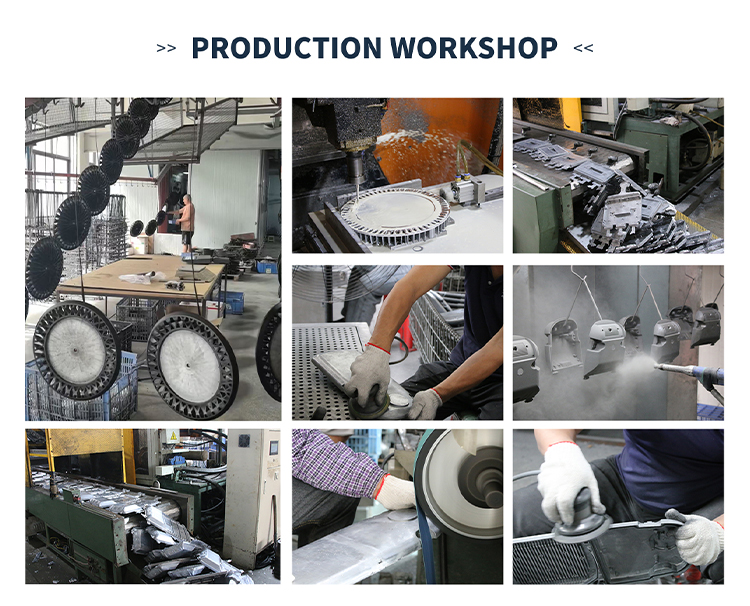
Aluminum die casting companies that run all three stages in-house deliver more consistent results than those who outsource finishing to a third party. It’s a straightforward question to include in any supplier qualification process.
Design Flexibility: Building Differentiation Into the Part
One of the underappreciated advantages of working with a capable aluminum die casting manufacturer is the design latitude the process provides.
Unlike extrusion — which is constrained to constant cross-sections — die casting produces true three-dimensional geometry. Mounting brackets, asymmetric fin arrays, snap-fit covers, integrated optical seats: all of these can be built into the housing as cast features rather than added as secondary hardware.
For lighting brands developing proprietary product lines, this translates into real differentiation. A housing designed around a specific LED module and driver assembly — rather than adapted from a standard enclosure — performs better thermally, assembles faster, and is harder for competitors to copy directly.
Custom tooling for aluminum die casting parts runs from $15,000 for simple single-cavity dies to $80,000+ for complex multi-cavity configurations. Amortized across production runs of 10,000+ units annually, with die lifespans typically above 100,000 shots, the per-unit tooling cost becomes negligible. Modifications to existing tooling — for regional mounting standards, certification markings, or dimensional adjustments — are considerably less expensive than starting from scratch.
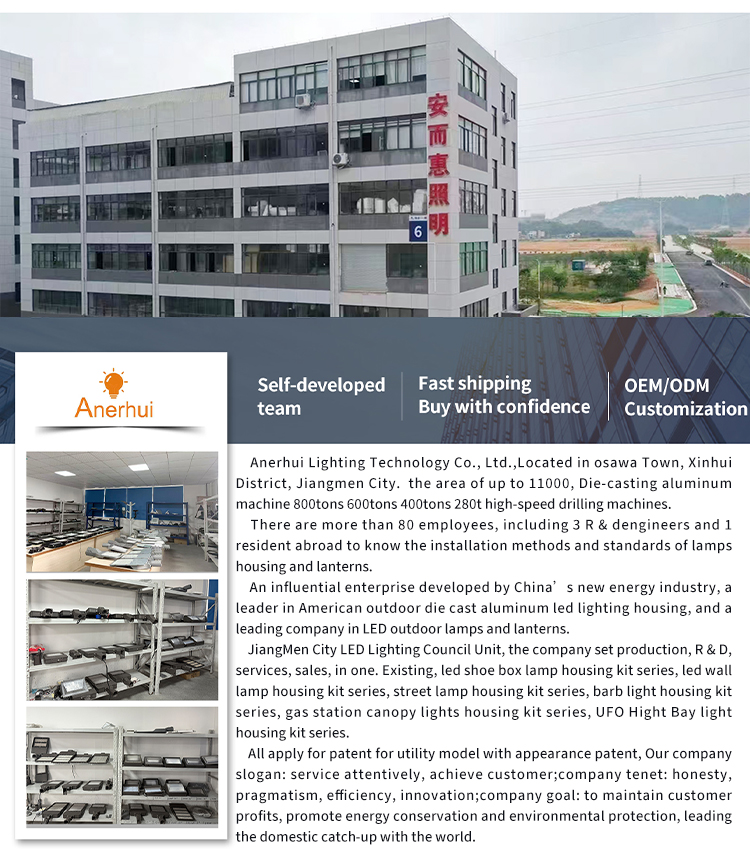
Anerhui Lighting works with buyers through the full development process, from DFM review and thermal modeling through volume production and export logistics.
Applications: Where These Housings Actually Go
The same process and material serve a wide range of commercial applications, each with specific requirements:
Street and roadway lighting — Housings need to survive –40°C to +50°C thermal cycling, sustained wind loads above 150 km/h, and years of exposure without maintenance access. Photometric precision requires tight tolerances on optical mounting surfaces.
Industrial high-bay and low-bay — Ambient temperatures of 40–50°C compress the available thermal headroom significantly. Extended fin arrays and careful thermal modeling are required to keep LED junction temperatures within rated limits.
Architectural and facade lighting — Aesthetic integration demands low-profile geometry and finish quality that coordinates with building materials. Die casting accommodates both while maintaining the optical precision these applications require.
Sports and venue lighting — High-output fixtures on tall poles face wind loading, occasional impact, and the need for precise beam aiming. Reinforced mounting provisions and aerodynamic profiles are standard requirements.
Evaluating Suppliers: What Actually Matters
When comparing aluminum die casting companies for LED housing supply, price per unit is the least predictive variable. These questions get closer to what matters:
Do they control the full process in-house? Die casting, CNC machining, and surface finishing under one roof means fewer handoffs and less quality variation between steps.
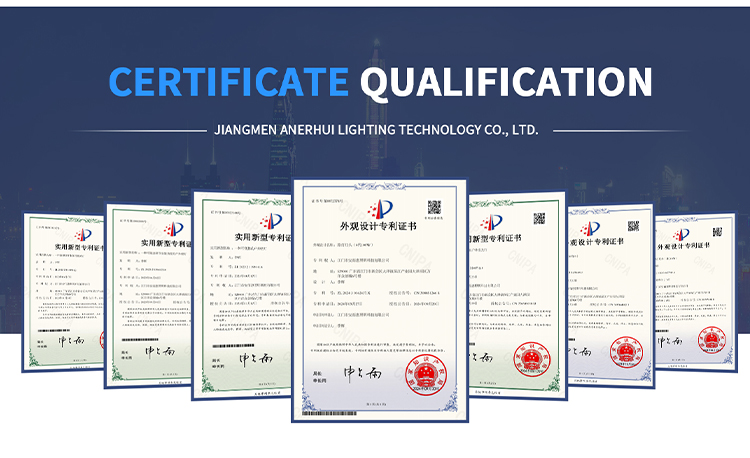
Can they document the alloy and treatment specs? Alloy certification, salt spray test data from independent labs, and IP test reports should be available without a lengthy request process.
How do they handle tooling ownership? Terms around tooling transfer, modification rights, and minimum production requirements affect your supply chain flexibility long-term.
Will they engage on thermal modeling? A supplier who participates in DFM reviews and provides thermal analysis adds engineering value that extends well beyond component supply.
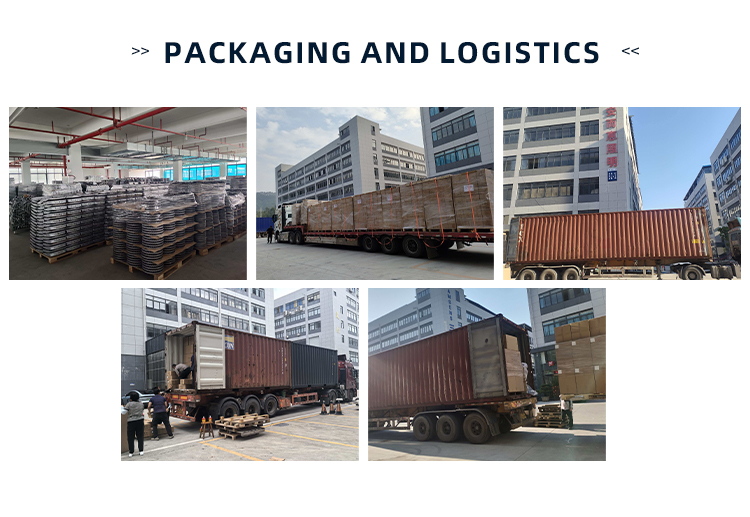
Do they have export experience in your target markets? Container shipment documentation, packaging standards for ocean freight, and lead time reliability are operational factors that affect real-world supply chain performance.
Anerhui Lighting handles all of the above — from initial design consultation through international export for buyers across multiple markets.
Summary
The difference between a good LED fixture and a failed warranty claim often comes down to decisions made at the housing level — alloy selection, surface treatment, thermal interface quality, and manufacturing consistency.
Aluminum alloy die casting delivers the right combination of thermal performance, weather resistance, and design flexibility for commercial LED applications. But the process has to be executed well, by an aluminum die casting company that understands the downstream consequences of the choices they make upstream.
Spec the housing carefully. Ask the right questions. And find a manufacturing partner who can answer them.