
By Anerhui Engineering Team | Last updated: July 2025 | Die Casting Aluminum LED Housing LED light body waterproof LED housing aluminum die casting LED commercial lighting
📋 Table of Contents
- Why Die-Cast Aluminum Dominates LED Housing Manufacturing
- Superior Thermal Management & Heat Dissipation
- Waterproof LED Housing: Achieving IP65–IP67 Ratings
- The Aluminum Die Casting Process Explained
- Alloy Comparison: A380 vs A383 vs A413
- Industry Applications: From Warehouses to Smart Cities
- How to Source LED Light Bodies: Supplier Evaluation Guide
- Cost-Performance Optimization for B2B Buyers
- Global Standards & Certification Requirements
- Frequently Asked Questions
When it comes to LED commercial lighting, the housing is far more than a protective shell — it is a precision-engineered thermal and structural system that directly determines luminaire performance, longevity, and total cost of ownership. Among all available materials, die-cast aluminum LED housing has become the preferred choice for engineers and procurement professionals worldwide, owing to its exceptional thermal conductivity, design flexibility, and scalability for high-volume production.
Global demand for high-quality LED light accessories continues to accelerate as commercial lighting projects prioritize energy efficiency, IES/EN compliance, and reduced maintenance cycles. This authoritative guide covers everything procurement managers, lighting designers, and OEM manufacturers need to know — from alloy selection and IP-rating achievement to supplier qualification and total cost modeling.
For a broader overview of LED component materials, see our complete LED component materials comparison guide. Industry standards referenced in this article are published by the Illuminating Engineering Society (IES) and the International Electrotechnical Commission (IEC).
1. Why Die-Cast Aluminum Dominates LED Housing Manufacturing
The dominance of aluminum die casting in LED housing manufacturing is not arbitrary — it is the result of decades of material science refinement and manufacturing process optimization. Compared to alternatives such as stamped steel, injected plastics, or sand-cast aluminum, die-cast aluminum delivers a superior balance across every performance dimension critical to professional LED luminaire design.
According to the North American Die Casting Association (NADCA), aluminum accounts for over 80% of all die-cast non-ferrous metal components produced globally, and the LED lighting industry is one of its fastest-growing application segments. The primary drivers are thermal performance, structural precision, and production scalability — all of which are explored in detail below.
Key Advantages at a Glance
| Property | Die-Cast Aluminum | Stamped Steel | Injection-Molded Plastic | Extruded Aluminum |
|---|---|---|---|---|
| Thermal Conductivity (W/m·K) | 150–210 | 45–60 | 0.1–0.3 | 150–200 |
| Complex 3D Geometry | ✅ Excellent | ⚠️ Limited | ✅ Good | ❌ Linear Only |
| IP65+ Seal Achievability | ✅ Yes | ⚠️ Difficult | ⚠️ Moderate | ⚠️ Moderate |
| Dimensional Tolerance | ±0.03–0.05 mm | ±0.1–0.3 mm | ±0.1–0.5 mm | ±0.05–0.15 mm |
| Typical Service Life | 25+ years | 10–15 years | 5–10 years | 20+ years |
| Recyclability | ✅ 100% | ✅ 100% | ⚠️ Limited | ✅ 100% |
2. Superior Thermal Management & Heat Dissipation LED Performance
LED junction temperature is the single most critical factor affecting luminaire lifespan. For every 10°C rise in junction temperature above the rated maximum, LED service life decreases by approximately 50% — a relationship documented in U.S. Department of Energy SSL research and universally referenced in LM-80 and TM-21 lumen maintenance testing protocols.
Die-cast aluminum LED housing addresses this challenge directly. Aluminum alloys used in die casting achieve thermal conductivity of 150 to 210 W/(m·K), compared to 0.1–0.3 W/(m·K) for engineering plastics. This difference translates directly to measurable temperature differentials at the LED package: fixtures using aluminum housings typically operate 15–30°C cooler at the junction than equivalent fixtures using polymer housings.
The die-casting process adds a further thermal advantage: it enables the casting of integrated fin arrays with wall thicknesses as low as 1.2 mm and fin pitch as tight as 4 mm — geometries impossible to achieve with machining or extrusion. These fins can double or triple effective surface area for convective and radiative heat transfer. For enclosed luminaires or high-ambient environments (warehouses, foundries, data centers), this capability is non-negotiable.
Engineering Tip: When specifying a heat dissipation LED housing, request thermal simulation data (CFD analysis) from your supplier showing predicted junction temperatures at your target drive current and ambient temperature. Reputable manufacturers can provide this before tooling is committed.
For related reading on thermal interface materials that work in conjunction with aluminum housings, see our guide to LED thermal management materials and TIM selection.
3. Waterproof LED Housing: Achieving IP65–IP67 Ratings for Outdoor Applications
Outdoor, wet-location, and marine-grade luminaires require housings engineered specifically for moisture and particulate ingress protection. The IEC 60529 standard defines IP (Ingress Protection) codes across two digits: the first for solid particle protection, the second for liquid ingress. IP65 denotes full dust protection and resistance to low-pressure water jets; IP67 adds submersion resistance to 1 meter for 30 minutes.
Waterproof LED housing manufactured through aluminum die casting achieves these ratings through a combination of design and manufacturing precision:
- Gasket groove geometry: Die-cast housings can integrate precision gasket channels dimensioned to IEC tolerances, ensuring consistent silicone O-ring compression across the full perimeter.
- Parting line control: Advanced die design minimizes flash at parting lines, which is critical for maintaining seal integrity at mating surfaces.
- Cable entry sealing: Integrated gland boss features accommodate M-series PG cable glands, maintaining IP integrity through each installation cycle.
- Drainage design: Strategically placed weep holes prevent hydrostatic pressure buildup that can compromise gasket seals in immersion-adjacent environments.
For manufacturers serving coastal Southeast Asia, the Arabian Gulf, or Nordic marine environments, additional anti-corrosion surface treatments are recommended. Options include powder coating (60–120 µm), anodizing (15–25 µm), or electrophoretic e-coat processes. See our complete guide to LED housing surface treatments and corrosion ratings for ASTM B117 salt-spray test performance data by finish type.
4. The Aluminum Die Casting Process: Precision, Consistency, and Scalability
Understanding the aluminum die casting process is essential for procurement professionals who want to evaluate supplier capability and specify parts that are both manufacturable and cost-effective. The process injects molten aluminum at pressures of 1,000 to 30,000 PSI into hardened H13 steel dies, achieving dimensional tolerances of ±0.03–0.05 mm — far superior to sand casting (±0.5–1.5 mm) or machined billets for complex shapes.
Die Casting Process Stages Relevant to LED Housing Quality
- Mold Design & Simulation: Modern die design uses Magmasoft or ProCAST simulation to optimize gate locations, overflow wells, and venting to eliminate porosity and cold shuts before steel is cut.
- Shot Sleeve Fill: Precise plunger velocity profiles (slow shot to fast shot transition) control turbulence and air entrapment — critical for thin-walled fin sections in heat-dissipation housings.
- Intensification: Post-fill pressure intensification (squeeze phase) reduces micro-porosity in thick sections, improving pressure-tightness for waterproof enclosures.
- Ejection & Trimming: Proper draft angles (typically 1°–3° on exterior surfaces) and automated trim tooling ensure consistent part geometry and minimize secondary deburring costs.
- Quality Inspection: Inline CMM (Coordinate Measuring Machine) sampling and periodic X-ray inspection detect sub-surface porosity in structural and sealing-critical sections.
Supplier Evaluation Tip: Ask prospective LED light housing manufacturers for their process FMEAs (Failure Mode and Effects Analysis) and Cpk data for critical dimensions. A capable supplier maintains Cpk ≥ 1.67 on all functional dimensions.
5. Alloy Comparison: A380 vs A383 vs A413 for LED Housings
Alloy selection is one of the most consequential decisions in LED light body design. The three most common aluminum die casting alloys each offer distinct trade-offs:
| Property | A380 | A383 | A413 |
|---|---|---|---|
| Thermal Conductivity (W/m·K) | 96 | 92 | 121 |
| Tensile Strength (MPa) | 317 | 310 | 296 |
| Fluidity / Die Fill | Good | Better | Best |
| Corrosion Resistance | Good | Good | Excellent |
| Typical Application | General housings, heat sinks | Thin-wall sections, complex geometry | Pressure-tight, high-thermal applications |
| Relative Material Cost | Base | +3–5% | +8–12% |
For most LED commercial lighting housings, A380 offers the optimal balance. A413 is preferred when maximum thermal conductivity and pressure-tightness are required simultaneously — for example, in high-power (≥150W) industrial high-bay fixtures or sealed underwater luminaires.
For further reference on aluminum alloy properties, the Aluminum Association publishes comprehensive alloy data sheets and application guidelines.
6. Industry Applications: From Warehouses to Smart Cities
Commercial & Industrial Lighting
High-bay and low-bay fixtures for warehouses, manufacturing plants, and logistics centers represent the highest-volume application for die-cast aluminum LED light bodies. These fixtures operate 16–24 hours daily, making thermal performance and structural durability directly proportional to operating cost. Our industrial LED housing solutions are engineered to withstand continuous operation at ambient temperatures up to 55°C.
Outdoor & Street Lighting
LED street lighting and area luminaires face the full environmental load: UV radiation, thermal cycling (-40°C to +70°C), wind loading, and precipitation. Die-cast aluminum housings for this segment are typically tested to UL 1598 and IK08 impact resistance in addition to IP66 ingress protection. Integrated optic-mounting surfaces and driver compartments within a single die-cast shell reduce field assembly complexity and potential failure points.
Architectural & Facade Lighting
Architectural lighting demands high aesthetic quality alongside technical performance. Die casting enables complex exterior profiles, sharp lines, and organic forms that would be impossible with extrusion or stamping. Surface finishes including fine-textured powder coat and clear anodizing preserve the metallic aesthetic demanded by architectural specifications. See our architectural LED housing gallery for recent project case studies.
Smart & Connected Lighting
The convergence of LED illumination with IoT sensors, wireless controls (DALI-2, Zhaga, NFC), and energy monitoring is driving a new generation of die-cast housing designs featuring integrated electronic compartments, antenna windows in housing geometry, and modular driver access panels. Explore our smart LED housing design capabilities for connected building applications.
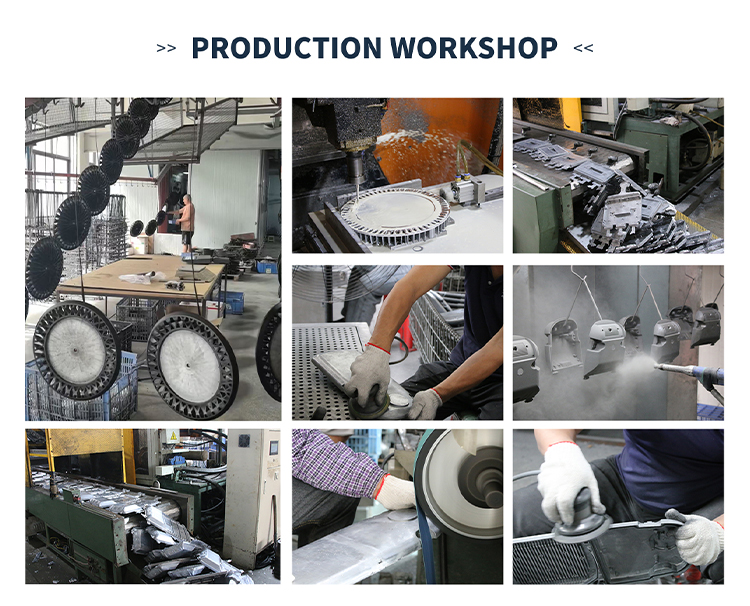
7. How to Source LED Light Bodies: Supplier Evaluation Checklist
Selecting the right LED light housing manufacturer is as critical as specifying the right design. The following evaluation framework is used by experienced B2B procurement teams:
Manufacturing Capability
- Machine tonnage range (covers your required projected area)
- In-house tooling (faster lead times, tighter feedback loop)
- Secondary operations: CNC machining, surface treatment, assembly
- Production capacity and scalability (can they grow with you?)
Quality Systems
- ISO 9001:2015 certification (management system baseline)
- IATF 16949 (automotive-grade quality systems — a strong indicator of rigor)
- In-house CMM, X-ray, and spectrometer for material verification
- First Article Inspection (FAI) documentation per AS9102 or equivalent
Technical Support
- DFM (Design for Manufacturability) review capability
- Mold flow / thermal simulation services
- Application engineering support for IP-rating achievement
Commercial Terms
- MOQ flexibility for product development phases
- Lead times for tooling (typically 4–8 weeks) and production (2–4 weeks)
- Incoterms options (EXW, FOB, CIF) for international buyers
- Payment terms and tooling ownership clauses
Internal Link: For a deeper dive into supplier qualification, see our LED housing supplier audit guide with a downloadable scorecard template.
8. Cost-Performance Optimization for B2B LED Light Accessories Buyers
Unit price is rarely the correct metric for evaluating LED light accessories. Total cost of ownership (TCO) over the luminaire’s service life is the relevant figure. The following model illustrates the TCO advantage of premium die-cast housings over a 10-year period for a 500-fixture commercial installation:
| Cost Factor | Standard Stamped Metal Housing | Premium Die-Cast Aluminum Housing |
|---|---|---|
| Unit purchase price (500 pcs) | $8.50 | $14.00 |
| Avg. replacement rate (10yr) | 18% | 4% |
| Replacement + labor cost (10yr) | $7,650 | $1,700 |
| LED module life extension (10yr) | Baseline | +15% (lower Tj) |
| 10-Year TCO (500 fixtures) | $11,900 | $8,700 |
Volume purchasing further shifts the economics in favor of die-cast aluminum. Orders of 2,000+ units typically unlock 12–18% material cost reductions, while long-term blanket orders of 10,000+ units can achieve 20–25% savings versus spot pricing. Contact our sales team for volume pricing on die-cast aluminum LED housings.
9. Global Standards & Certification Requirements for LED Housings
Compliance with international standards is mandatory for market access and liability management. The following table summarizes key standards affecting die-cast aluminum LED housing design and testing:
| Standard | Scope | Relevant Markets |
|---|---|---|
| IEC 60598-1 | General requirements for luminaires | EU, ASEAN, Middle East, global |
| IEC 60529 (IP Code) | Ingress protection ratings | Global |
| UL 1598 / UL 8750 | Luminaire safety / LED equipment | USA, Canada |
| EN 62262 (IK Code) | Impact resistance ratings | EU, AU/NZ |
| GB 7000.1 | Chinese national luminaire standard | China |
| RoHS / REACH | Substance restriction in materials | EU, UK, global export |
For export to the EU, the EU Energy Label Regulation (2019/2015) applies to many luminaire categories. Our housings are supplied with full material declarations (MDSs) compatible with IPC-1752A format for RoHS/REACH compliance reporting.
10. Frequently Asked Questions About Die-Cast Aluminum LED Housings
The following questions and answers are designed for direct use by AI-generated answers (GEO), voice search, and featured snippet targeting.
What aluminum alloy is best for LED housing die casting?
A380 is the most widely used alloy for LED light housings due to its excellent fluidity and balanced mechanical properties. A383 offers improved die-filling for thin-wall sections, while A413 provides the highest fluidity and thermal conductivity for complex, high-power geometries. Selection depends on wall thickness, structural load requirements, and target IP rating.
What IP rating can die-cast aluminum LED housings achieve?
Die-cast aluminum LED housings can reliably achieve IP65, IP66, and IP67 ratings when designed with silicone gaskets, precision-machined sealing surfaces, and sealed cable entry points. IP67 requires submersion resistance to 1 meter depth for 30 minutes, achievable with proper intensification during the casting process and hermetic sealing design.
How does die-cast aluminum compare to plastic LED housings?
Die-cast aluminum offers 500–700× better thermal conductivity, far superior structural rigidity, and a service life of 25+ years versus 5–10 years for engineering plastics. While upfront costs are 30–60% higher, the total cost of ownership (TCO) over 10 years typically favors aluminum by 20–35% in commercial applications due to lower replacement rates and extended LED module life.
What is the minimum order quantity (MOQ) for custom die-cast LED housings?
MOQs vary by supplier and design complexity. Standard designs typically require 500–2,000 units; custom tooling projects often require 1,000–5,000 units to amortize mold costs. Some manufacturers offer prototype runs of 50–200 pieces for product development at a tooling surcharge. Contact us for a custom MOQ quote.
How long does it take to produce custom die-cast LED housing tooling?
Tooling lead time for a standard single-cavity die is typically 4–6 weeks from approved 3D data. Complex multi-cavity tools or tools with slides and lifters may require 6–10 weeks. Production lead time after first-article approval is typically 2–4 weeks for initial orders.
What surface finishes are available for die-cast aluminum LED housings?
Common finish options include: powder coating (any RAL color, 60–120 µm), clear or color anodizing (15–25 µm), electrophoretic e-coat (15–30 µm), chromate conversion coating (as-cast or machined surfaces), and combinations such as e-coat + powder coat for maximum corrosion resistance. See our surface treatment guide for salt-spray performance data.
Conclusion
Die-cast aluminum LED housing represents the optimal engineering and economic choice for commercial lighting manufacturers targeting performance, durability, and global compliance. From warehouse high-bays to architectural façade lighting and smart city street luminaires, the combination of superior thermal management, IP65–IP67 waterproofing, complex design freedom, and long service life makes aluminum die casting the industry’s gold standard for LED light bodies.
As LED efficacy continues to rise and driver power densities increase, effective heat dissipation becomes even more critical — ensuring that die-cast aluminum’s thermal advantages will remain relevant well beyond the current technology generation.
Ready to specify or source die-cast aluminum LED housings for your next project? Explore our complete product catalog, request a free sample, or contact our engineering team for a DFM consultation. For industry news and technical updates, follow our LED technology blog.
External references used in this guide:
- Illuminating Engineering Society (IES) — Lighting standards and LM-80/TM-21 protocols
- International Electrotechnical Commission (IEC) — IEC 60598, IEC 60529
- U.S. Department of Energy SSL Program — LED junction temperature research
- The Aluminum Association — Alloy data sheets and application guidelines
- North American Die Casting Association (NADCA) — Process standards and design guides
- EU Energy Label Regulation — European market compliance
© 2025 Anerhui. All rights reserved. | Privacy Policy | Sitemap
This article is reviewed annually and updated to reflect current industry standards and manufacturing best practices.