
By Anerhui Engineering Team | Last updated: May 2026 | LED housing supplier audit supplier evaluation procurement checklist die-cast aluminum B2B sourcing guide
📋 Table of Contents
- Why Formal Supplier Audits Save More Than They Cost
- Category 1: Manufacturing Capability (25 points)
- Category 2: Quality Management System (20 points)
- Category 3: Thermal Engineering Capability (15 points)
- Category 4: IP Rating Design & Testing (15 points)
- Category 5: Surface Treatment & Materials Compliance (10 points)
- Category 6: Commercial Terms & Scalability (10 points)
- Category 7: Communication & Technical Support (5 points)
- Critical Red Flags: Automatic Disqualification Criteria
- Complete Scorecard Summary & Qualification Thresholds
- How to Structure Your First Order with a New Supplier
- How Anerhui Performs Against This Scorecard
- Frequently Asked Questions
Every LED housing procurement failure — alloy substitution, IP degradation, thermal underperformance, dimensional inconsistency — can be traced back to a supplier evaluation process that missed a critical capability gap. Experienced B2B procurement teams in the lighting industry know that the right supplier audit framework, applied before the first production order, eliminates the vast majority of field failures and warranty claims that would otherwise emerge 12–24 months after delivery.
This guide provides a complete, structured LED housing supplier audit framework used by professional procurement teams to qualify die-cast aluminum LED housing manufacturers. It covers 7 audit categories, 42 individual evaluation criteria, automatic disqualification red flags, a 100-point scoring system, and qualification thresholds — everything needed to make a defensible, documented sourcing decision.
This guide is the final installment in Anerhui’s complete LED housing technical series. For application-specific context, see our LED light housing manufacturer selection guide, industrial LED housing solutions guide, and commercial LED housing guide. Audit methodology draws on frameworks from NADCA, ISO 9001:2015, and IPC supplier qualification standards.
1. Why Formal Supplier Audits Save More Than They Cost
The cost of a supplier audit — whether conducted remotely via documentation review or on-site — is trivially small compared to the cost of a single supply chain failure. Consider the real-world cost cascade of sourcing LED housings from an unqualified supplier for a 1,000-fixture commercial project:
- Alloy substitution discovered post-installation: Replacement of 1,000 fixtures + labor at $45/fixture = $45,000. Plus: brand reputation damage to the lighting brand that specified the product.
- IP rating failure (gasket design inadequate): 30% field failure rate within 24 months in coastal installation = 300 warranty replacements = $13,500 + freight + customer relationship damage.
- Thermal underperformance (wrong fin geometry): LED L70 reached in 4 years instead of 10 years. Customer contractually entitled to fixture replacement under performance guarantee = full project re-supply cost.
A structured audit that identified any one of these failure modes before the first order would have cost $500–2,000 in time and documentation review. The ROI on systematic supplier qualification is not measurable as a ratio — it is the difference between a profitable supply chain and a catastrophic one.
Audit approach: This guide supports both remote documentary audit (reviewing documents and test reports — appropriate for initial qualification and most ongoing supplier relationships) and on-site audit (factory visit — recommended for new suppliers receiving orders of 5,000+ units or handling critical product lines). Remote audit is completed in 5–7 working days; on-site audit in 1–2 days on-site plus 2–3 days of preparation and reporting.
2. Category 1: Manufacturing Capability (25 points)
Manufacturing capability is the foundational audit category — if a supplier cannot produce your required parts at the required quality level, all other attributes are irrelevant. This category carries the highest weighting (25 points) because capability gaps here cannot be remediated by documentation or management systems.
🏭 Category 1: Manufacturing Capability Max: 25 points
| Criterion | Evidence Required | Points |
|---|---|---|
| Die-casting machine tonnage matches your part size | Machine list with tonnage ratings; confirm max projected area per machine covers your housing dimensions | 5 |
| In-house tooling / mold room | Photos of tool room; ask “where is the tooling made?” — in-house vs outsourced is a critical differentiator | 5 |
| Secondary operations: CNC machining | In-house CNC capability for precision sealing surfaces, mounting threads, optical datums | 4 |
| Secondary operations: Surface treatment | In-house powder coating or anodizing line; or verified qualified subcontractor with documented quality control | 4 |
| Monthly production capacity | Stated capacity in units per month; confirm with machine shift schedule and cycle time data | 4 |
| Assembly capability | In-house SKD kit assembly: gasket installation, hardware, cable gland fitting, final inspection | 3 |
Key question: “Where is the tooling made, and who owns it?” A supplier who cannot answer confidently — or who gives evasive answers about tooling location — is almost certainly outsourcing tooling. This means longer lead times, less responsive design changes, potential tool ownership disputes, and inability to audit tooling quality. In-house tooling is a non-negotiable indicator of genuine manufacturing capability.
3. Category 2: Quality Management System (20 points)
🔍 Category 2: Quality Management System Max: 20 points
| Criterion | Evidence Required | Points |
|---|---|---|
| ISO 9001:2015 certification | Valid certificate with certificate number, scope, issuing body, and expiry date. Verify issuing body is UKAS, DAkkS, CNAB, or equivalent accredited body — not self-certified | 4 |
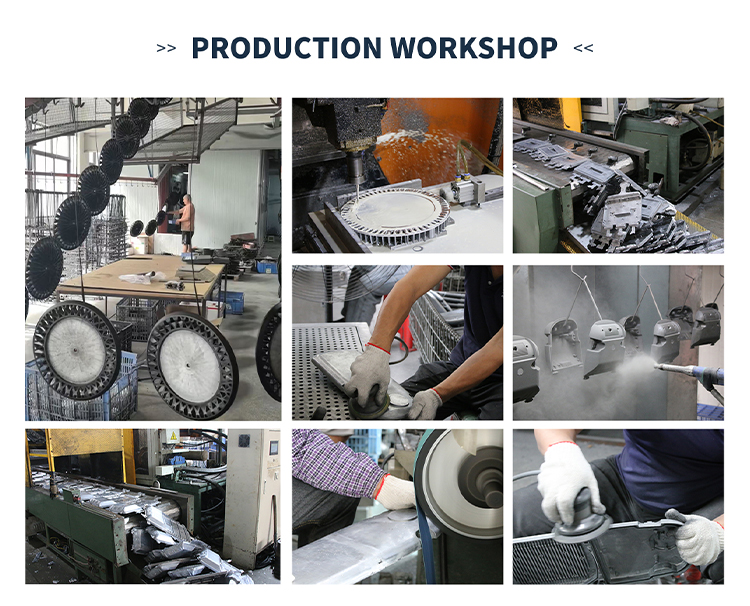
| In-house CMM dimensional inspection | CMM equipment on-site; request a sample CMM measurement report on a part from your target product category showing ±0.05 mm or better on critical dimensions | 4 |
| In-house alloy spectrometer (XRF) | XRF or OES spectrometer on-site; request alloy composition certificate from last production batch showing Si, Cu, Mg, Zn content against A380/ADC12 specification ranges | 4 |
| First Article Inspection (FAI) process | Documented FAI procedure; sample FAI report for an existing customer — confirms dimensional, material, and functional checks before production release | 4 |
| X-ray inspection capability | X-ray or CT equipment on-site (or qualified subcontractor); sample X-ray images showing cross-section of housing base and gasket groove areas | 2 |
| Non-conformance & corrective action system | Documented NCR process; sample 8D corrective action report from a previous customer quality issue | 2 |
The alloy spectrometer criterion (4 points) is weighted heavily because alloy substitution is the most common and most consequential quality fraud in die-cast LED housing supply chains. Replacing A380 with A360 or unlabeled secondary alloy reduces thermal conductivity by 10–15% and corrosion resistance significantly — effects that are invisible at incoming inspection but manifest as field failures within 2–3 years. A supplier who cannot or will not provide spectrometer certificates should be disqualified regardless of their score in other categories.
4. Category 3: Thermal Engineering Capability (15 points)
Thermal engineering capability separates manufacturers who understand why their housing designs perform as they do from those who simply copy competitor geometries without understanding the thermal physics. For LED housing sourcing, this distinction directly determines whether you can trust the supplier’s thermal performance claims.
🌡️ Category 3: Thermal Engineering Capability Max: 15 points
| Criterion | Evidence Required | Points |
|---|---|---|
| CFD thermal simulation capability | Request a sample CFD simulation report at a specified wattage and ambient temperature — shows airflow vectors, temperature distribution, and predicted junction temperature. Must be in-house, not outsourced | 5 |
| Alloy selection guidance | Can the engineering team explain when to specify A380 vs ADC12 vs A413 for your specific wattage and ambient temperature? A correct, technically grounded answer confirms genuine thermal knowledge | 4 |
| Fin geometry optimization experience | Evidence of iterative fin design development — multiple fin heights, pitches, and orientations tested across product generations. Request thermal test data comparing fin geometry variants | 3 |
| Thermal validation on production samples | In-house temperature measurement capability for first-article thermal validation; sample thermal test report showing measured case temperature vs CFD prediction | 3 |
For detailed background on LED thermal management that will help you evaluate supplier responses during the thermal audit, see our heat dissipation LED housing guide — which covers junction temperature calculation, fin geometry optimization, and alloy selection in full technical detail.
5. Category 4: IP Rating Design & Testing (15 points)
💧 Category 4: IP Rating Design & Testing Max: 15 points
| Criterion | Evidence Required | Points |
|---|---|---|
| In-house IP test facility | IP spray cabinet (IEC 60529) on-site; photos of test equipment; test capability for IP54 through IP67 | 4 |
| IP testing on fully assembled housing | CRITICAL: IP test reports must show testing performed on assembled housing (with gasket, lens, cable glands installed) — not on bare casting. Request test photos showing assembled fixture in spray cabinet | 5 |
| Gasket groove design documentation | Technical drawing showing gasket groove dimensions (width, depth, corner radius) with tolerances; confirm dimensions are within silicone O-ring manufacturer’s compression recommendations | 3 |
| Thermal cycling IP validation | IP testing performed after thermal cycling (-25°C to +70°C, 20 cycles minimum) — confirms seal integrity is maintained through temperature variation, not just at ambient test conditions | 3 |
Critical point on IP testing: Testing IP on a bare casting (without gasket and lens installed) is meaningless for predicting real-world performance. The casting itself will pass IP67 — it has no penetrations. The IP rating of the assembled fixture is determined entirely by the gasket compression, cable gland sealing, and lens frame fit. Always request test reports with photos showing the complete assembled fixture in the IP test cabinet. This single criterion eliminates a large proportion of commodity suppliers whose IP claims are not credible.
6. Category 5: Surface Treatment & Materials Compliance (10 points)
🎨 Category 5: Surface Treatment & Materials Compliance Max: 10 points
| Criterion | Evidence Required | Points |
|---|---|---|
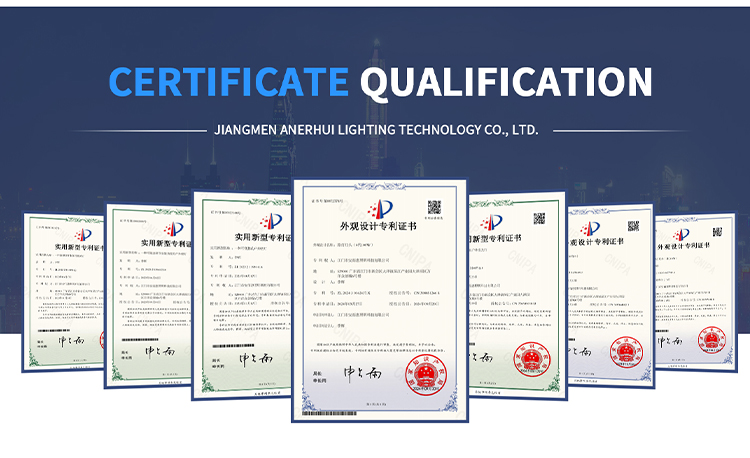
| RoHS-compliant pre-treatment (Cr³⁺ trivalent chromate only) | MSDS for pre-treatment chemicals confirming trivalent chromate (Cr³⁺) — hexavalent Cr⁶⁺ is prohibited under EU RoHS Directive 2011/65/EU and must not be present | 3 |
| ASTM B117 salt spray test reports | Third-party test report showing hours to failure for standard powder coat finish; confirm test was performed at accredited lab, not self-reported | 3 |
| Powder coat chemistry specification | Can the supplier specify TGIC polyester vs superdurable polyester chemistry? A supplier who cannot distinguish these is not specifying outdoor-appropriate coatings | 2 |
| RoHS / REACH material declaration (IPC-1752A) | Full material declaration for housing alloy, surface treatment, gasket material, lens material, and hardware — in IPC-1752A format for EU market compliance | 2 |
7. Category 6: Commercial Terms & Scalability (10 points)
📦 Category 6: Commercial Terms & Scalability Max: 10 points
| Criterion | Evidence Required | Points |
|---|---|---|
| MOQ flexibility (samples to volume) | Confirm: free sample availability (1–20 pcs); small trial order MOQ (50–200 pcs); volume production MOQ (500–2,000 pcs for custom tooling) | 3 |
| Tooling ownership clause | Written confirmation that tooling paid for by buyer is owned by buyer, can be transferred to another manufacturer, and will not be used for other customers | 3 |
| Realistic lead time quotation | Standard catalog: 2–3 weeks. Custom tooling: 4–10 weeks depending on complexity. Suppliers quoting unrealistically short tooling lead times (e.g. 2 weeks for new custom tooling) are misrepresenting their actual capability | 2 |
| Blanket order / annual supply terms | Ability to support annual blanket orders with quarterly call-off schedules — important for distributors and large-volume buyers seeking price and delivery certainty | 2 |
8. Category 7: Communication & Technical Support (5 points)
💬 Category 7: Communication & Technical Support Max: 5 points
| Criterion | Evidence Required | Points |
|---|---|---|
| English language technical capability | Engineering team can discuss thermal design, alloy selection, and IP requirements in English without translation gaps that create specification misunderstandings | 2 |
| DFM review process | Documented DFM review capability; sample DFM report showing design change recommendations with technical rationale | 2 |
| Technical documentation package | Available: dimensional drawings in DWG/PDF; IES photometry files; CE/IP certificates; material declarations — without requiring separate requests for each document | 1 |
9. Critical Red Flags: Automatic Disqualification Criteria
The following conditions are automatic disqualification triggers — regardless of total scorecard score. A supplier exhibiting any of these characteristics should be removed from consideration without further evaluation:
🚫 Red Flag 1: Cannot provide alloy composition certificates
If a supplier cannot or will not provide XRF/OES spectrometer certificates showing alloy composition against specification, alloy substitution must be assumed. This is the single most prevalent quality fraud in die-cast LED housing supply chains.
🚫 Red Flag 2: ISO 9001 claim without verifiable certificate
Many suppliers claim ISO 9001 certification without a valid, accredited certificate. Always request the certificate number, issuing body name, and expiry date, then verify on the issuing body’s public database. Self-declared ISO compliance is not ISO certification.
🚫 Red Flag 3: IP test reports on bare castings only
IP test reports that do not show fully assembled fixtures (with gasket, lens, and cable glands installed) in the test chamber do not validate the product’s IP rating. This is a deliberate or negligent misrepresentation of IP performance.
🚫 Red Flag 4: No in-house tooling room
Suppliers who outsource all tooling to third parties cannot control tool quality, lead times, or design change responsiveness. For any custom housing development, in-house tooling capability is a baseline requirement.
🚫 Red Flag 5: Pricing more than 25% below market average
Sustainable LED housing manufacturing at professional quality standards has predictable cost floors. Pricing significantly below these floors — more than 25% below comparable qualified suppliers — almost always indicates material substitution, process shortcuts, or quality compromises that will manifest as field failures.
🚫 Red Flag 6: Hexavalent chromate (Cr⁶⁺) in pre-treatment process
Hexavalent chromate is prohibited under EU RoHS Directive 2011/65/EU. Suppliers still using Cr⁶⁺ pre-treatment cannot legally export to the EU and are operating with non-compliant processes. This also suggests a generally non-compliant approach to materials and chemistry.
10. Complete Scorecard Summary & Qualification Thresholds
📊 Scorecard Summary — Total: 100 Points
| Category | Max Points | Minimum to Pass |
|---|---|---|
| 1. Manufacturing Capability | 25 | 18 |
| 2. Quality Management System | 20 | 14 |
| 3. Thermal Engineering Capability | 15 | 10 |
| 4. IP Rating Design & Testing | 15 | 11 |
| 5. Surface Treatment & Compliance | 10 | 7 |
| 6. Commercial Terms & Scalability | 10 | 6 |
| 7. Communication & Technical Support | 5 | 3 |
| TOTAL | 100 | 70 |
| Total Score | Qualification Status | Recommended Action |
|---|---|---|
| 85–100 | ✅ Preferred Supplier | Approved for all order types including large-volume and custom tooling. Establish long-term partnership framework. |
| 75–84 | ✅ Qualified Supplier | Approved for standard production orders. Address gap areas before committing to custom tooling or large-volume agreements. |
| 70–74 | ⚠️ Conditional Approval | Approved for trial orders only (50–200 units). Require gap remediation plan with timeline before production scale-up. Re-audit after remediation. |
| 60–69 | ❌ Not Qualified | Do not place production orders. Supplier may be invited to re-audit after addressing identified gaps with evidence of improvement. |
| Below 60 | ❌ Disqualified | Disqualified. Do not engage further. Significant capability or integrity gaps identified. |
| Note: Any Red Flag from Section 9 results in automatic disqualification regardless of total score. | ||
11. How to Structure Your First Order with a New Qualified Supplier
Passing the supplier audit qualifies a manufacturer for initial orders — it does not eliminate the need for a staged onboarding process. The following structure minimizes risk while efficiently building the supplier relationship:
Stage 1: Free Sample Evaluation (0 cost, 1–2 weeks)
- Request 5–20 samples of your target housing model(s)
- Evaluate: surface finish quality, dimensional consistency (measure gasket groove, mounting hole positions), assembly fit, packaging quality
- Request accompanying documentation: alloy certificate, IP test report, dimensional drawing
- Conduct basic IP test on assembled housing in your facility if possible
Stage 2: Trial Production Order (50–200 units, 3–5 weeks)
- Place a small production order — this tests the supplier’s production quality consistency, not just sample quality
- Specify incoming inspection plan: measure 10% dimensional sample; visual inspection for surface defects; IP spot test on 3–5 assembled units
- Evaluate on-time delivery, documentation accuracy, and communication responsiveness
- Address any non-conformances with formal 8D corrective action request
Stage 3: Custom Tooling Qualification (if applicable)
- Only proceed to custom tooling after passing Stages 1 and 2
- Confirm tooling ownership in purchase order: “Tooling paid for by [Buyer] is the sole property of [Buyer] and may be transferred to another manufacturer at [Buyer]’s discretion”
- Require First Article Inspection (FAI) report before production release: dimensional report, alloy cert, IP test, surface treatment inspection
- Hold initial production lot in quarantine until FAI approval
Stage 4: Volume Production & Ongoing Monitoring
- Establish ongoing quality plan: alloy certificate per batch, IP test per 500 units, annual dimensional verification of critical features
- Schedule annual supplier re-audit (documentary) and on-site audit every 2–3 years for strategic suppliers
- Monitor field return rates by supplier and housing model — early indicator of production drift
Documentation standard for ongoing supply: Every production shipment should be accompanied by: (1) alloy composition certificate for the batch; (2) dimensional inspection report (sample size per your AQL plan); (3) IP test certificate for the batch; (4) surface treatment film thickness report; and (5) packing list with item quantities and carton marks. Suppliers who provide this without being asked for each shipment demonstrate genuine quality system maturity.
12. How Anerhui Performs Against This Scorecard
In the interest of transparency, the following table shows Anerhui’s self-assessed performance against the audit scorecard, with verifiable evidence available on request for every criterion:
🏆 Anerhui Audit Self-Assessment — Score: 95/100
- Category 1 — Manufacturing (24/25): 280T–800T die-casting machines; in-house tool room; CNC machining; in-house powder coating; 30,000+ units/month capacity; full SKD assembly. (1 point: no in-house anodizing — qualified subcontractor used)
- Category 2 — Quality System (19/20): ISO 9001:2015 certified; CMM inspection; XRF spectrometer; FAI process; NCR/8D system. (1 point: X-ray at qualified subcontractor, not fully in-house)
- Category 3 — Thermal Engineering (15/15): In-house CFD simulation; alloy selection guidance (A380/ADC12/A413); multi-generation fin geometry development; thermal validation on first articles
- Category 4 — IP Testing (15/15): In-house IP spray cabinet; all testing on fully assembled housings; gasket groove dimensional documentation; thermal cycling IP validation
- Category 5 — Surface Treatment (10/10): Cr³⁺ trivalent pre-treatment standard; ASTM B117 third-party reports; TGIC/superdurable chemistry specification; full IPC-1752A material declarations
- Category 6 — Commercial Terms (9/10): Free samples; 50-unit trial MOQ; tooling ownership contracts; realistic lead time quotation. (1 point: blanket order quarterly call-off terms available but not standard — requires negotiation)
- Category 7 — Communication (5/5): English-capable engineering team (including overseas resident engineer); documented DFM review process; full technical documentation package standard
- Red Flags: 0 — All 6 red flag criteria confirmed clear
All documentation supporting this self-assessment is available to qualified buyers upon request — no NDAs required for standard audit documentation. Contact Jamin Mo at Anerhui to initiate the documentation review process.
Ready to audit Anerhui as your LED housing supplier?
Request our complete audit documentation package — alloy certificates, IP test reports, CMM reports, ASTM B117 certificates, ISO 9001 certificate, and RoHS/REACH declarations — delivered within 3 business days.
📋 Request Audit Documentation Package | 📦 Request Housing Samples | 🔍 Browse Product Range
13. Frequently Asked Questions About LED Housing Supplier Audits
How do I audit a LED housing supplier?
A comprehensive LED housing supplier audit covers 7 categories: manufacturing capability (machine tonnage, in-house tooling, secondary operations); quality management system (ISO 9001, CMM, alloy spectrometer, X-ray); thermal engineering (CFD simulation, alloy selection guidance, fin optimization); IP rating design and testing (in-house IP facility, fully assembled testing); surface treatment (Cr³⁺ pre-treatment, ASTM B117, powder coat chemistry); commercial terms (MOQ flexibility, tooling ownership); and communication and support (DFM review, technical documentation). Use the 100-point scorecard in this guide and qualify suppliers scoring 70+ with no Red Flags.
What certifications should an LED housing manufacturer have?
Minimum certification baseline: ISO 9001:2015 (verify certificate number with accredited issuing body); CE declaration capability (LVD + EMC for EU); RoHS compliance with IPC-1752A material declarations; IP test reports from accredited laboratory (IEC 60529); ASTM B117 salt spray certificates for surface treatment. Additional certifications for specific markets: UL listing (USA), GB/T standards (China), SAA/RCM (Australia). See our LED light housing manufacturer guide for full certification requirements by market.
What are the biggest red flags when evaluating an LED housing supplier?
The six automatic disqualification red flags are: (1) cannot provide alloy composition certificates; (2) ISO 9001 claim without verifiable certificate from accredited issuing body; (3) IP test reports on bare castings only — not fully assembled housings; (4) no in-house tooling room; (5) pricing more than 25% below market average; and (6) hexavalent chromate (Cr⁶⁺) in pre-treatment process. Any single red flag warrants disqualification regardless of other scorecard performance.
How do I verify alloy quality when sourcing LED housings from China?
Three-step alloy verification: (1) request the supplier’s batch spectrometer certificate showing Si, Cu, Mg, Zn content against A380/ADC12/A413 specification ranges; (2) for large orders, commission third-party XRF testing on arrival samples at an accredited materials lab ($50–150 per test); (3) establish alloy composition as a contractual specification in your purchase order — substitution then constitutes breach of contract. Anerhui provides alloy composition certificates for every production batch as standard documentation.
What is a reasonable lead time for custom die-cast LED housing tooling?
Reasonable tooling lead times: simple single-cavity tool — 4–6 weeks; moderate complexity (slides, multiple cavities, sensor compartments) — 6–8 weeks; complex tool (Zhaga sockets, antenna windows, multi-cavity with slides) — 8–10 weeks. Suppliers claiming custom tooling lead times under 4 weeks are likely cutting steel verification steps, outsourcing to low-quality fabricators, or misrepresenting their schedule. In-house tool rooms consistently deliver within these ranges.
How should I structure the first order with a new LED housing supplier?
Use the 4-stage approach: Stage 1 — free sample evaluation (5–20 pcs, assess quality and documentation); Stage 2 — trial production order (50–200 units, test production consistency and on-time delivery); Stage 3 — custom tooling qualification (only after passing Stages 1–2, with FAI report required before production release); Stage 4 — volume production with documented ongoing quality plan (alloy cert per batch, IP test per 500 units, annual dimensional verification).
Conclusion
A structured LED housing supplier audit using the framework in this guide consistently eliminates the supply chain failures — alloy substitution, IP degradation, thermal underperformance — that generate costly warranty claims and damage customer relationships. The 100-point scorecard provides an objective, documented basis for supplier qualification decisions that procurement teams can defend internally and revisit systematically as supplier relationships evolve.
The investment in supplier qualification is modest. The cost of an unqualified supplier reaching production scale is not. Apply this framework before the first production order, structure initial orders in the four-stage sequence described in Section 11, and establish ongoing quality monitoring as the supply relationship matures.
Anerhui welcomes formal supplier audits and provides complete audit documentation without NDAs. If you are evaluating Anerhui as a potential LED housing supplier, contact our team to initiate the documentation review process. For the full technical context behind each audit criterion, explore our complete LED housing technical series:
- Die-Cast Aluminum LED Housing Complete Guide
- Heat Dissipation LED Housing Guide
- LED Housing Surface Treatments Guide
- LED Component Materials Guide
- Smart LED Housing Design Guide
- Industrial LED Housing Solutions Guide
- Commercial LED Housing Guide
- Architectural LED Housing Gallery
- LED Light Housing Manufacturer Guide
External References
- ISO 9001:2015 Quality Management Systems
- North American Die Casting Association (NADCA) — Die casting process and quality standards
- IEC — IEC 60529 IP ratings, IEC 60598 luminaire standards
- ASTM International — ASTM B117 salt spray testing
- EU RoHS Directive 2011/65/EU
© 2026 Anerhui Lighting Technology Co., Ltd. All rights reserved. | Privacy Policy | Sitemap | Blog
This guide is reviewed and updated annually to reflect current industry standards, procurement best practices, and Anerhui manufacturing capabilities.