
By Anerhui Engineering Team | Last updated: May 2026 | waterproof LED housing · IP65 · IP66 · IP67 · die-cast aluminum · outdoor LED housing
When a commercial LED luminaire fails in the field within 12–24 months of installation, the cause is water or dust ingress in the vast majority of cases. The fixture may have passed IP65 testing at the factory — but passed it on a bare casting, without gasket, lens, or cable glands installed, in a lab at 25°C ambient. That test tells you almost nothing about real-world sealing performance.
Waterproof LED housing design is one of the most technically nuanced areas of commercial luminaire engineering. This guide covers the complete technical picture — from IP rating fundamentals and die-cast sealing design to coastal specification requirements and supplier validation. For related guides, see our heat dissipation LED housing guide, surface treatments guide, and industrial LED housing solutions guide.

1. IP Rating Basics: What the Numbers Actually Mean
The IP (Ingress Protection) rating system, defined by IEC 60529, uses two digits to classify the degree of protection provided by an enclosure against solid particles and liquids.
First Digit — Solid Particle Protection
| Rating | Protection Level | Relevance to LED Housings |
|---|---|---|
| IP4x | Protected against solids >1mm | Minimum for indoor non-dusty environments |
| IP5x | Dust protected — limited ingress | Acceptable for sheltered outdoor |
| IP6x | Dust tight — zero ingress | Required for all outdoor LED housings |
Second Digit — Liquid Ingress Protection
| Rating | Protection Level | Test Conditions | Application |
|---|---|---|---|
| IPx4 | Splashing water any direction | 10 min, 0.07 L/min per cm² | Indoor wet areas only |
| IPx5 | Low-pressure water jets | 12.5 L/min, 3 min, 1 m distance | Standard outdoor minimum |
| IPx6 | High-pressure water jets | 100 L/min, 3 min, 1 m distance | Street lights, parking lots, washdown |
| IPx7 | Submersion 1 m, 30 min | Static pressure | Ground level, marina, flood-risk |
Critical point: IP ratings must be tested on fully assembled enclosures — with gasket, lens, cable glands, and fasteners installed and torqued. A bare casting tested without these components will pass IP67 simply because it has no penetrations. This distinction eliminates a large proportion of misleading IP claims from commodity suppliers.
2. IP65 vs IP66 vs IP67: Detailed Comparison for LED Housings
| Parameter | IP65 | IP66 | IP67 |
|---|---|---|---|
| Dust protection | ✅ Dust tight | ✅ Dust tight | ✅ Dust tight |
| Water jet pressure | Low (12.5 L/min) | High (100 L/min) | N/A — submersion test |
| Submersion | Not required | Not required | 1 m depth, 30 min |
| Gasket compression | 15–20% | 20–25% | 25–30% |
| Gasket groove tolerance | ±0.05 mm | ±0.05 mm | ±0.03 mm |
| Typical LED applications | Wall pack, garden light, high bay, canopy | Street light, shoebox, food processing, washdown | Ground-level landscape, marina, car wash |
| Surface treatment | TGIC powder coat | Superdurable powder coat | E-coat + superdurable powder coat |
3. How Die-Cast Aluminum Achieves IP65–IP67
Die-cast aluminum is the preferred material for waterproof LED housings because the die casting process uniquely enables the precision sealing geometry that IP ratings require. Three manufacturing capabilities make this possible:
Precision Gasket Groove Geometry
Die casting achieves dimensional tolerances of ±0.03–0.05 mm on gasket groove width, depth, and corner radius — the critical dimensions that determine gasket compression percentage. Silicone O-ring seals require 15–30% compression (depending on IP target) with compression uniformity within ±3% around the full perimeter. This precision is unachievable with stamped steel (±0.1–0.3 mm) or injection-molded plastic (±0.1–0.5 mm).
Integrated Cable Gland Boss Features
Die casting allows PG cable gland boss features to be cast directly into the housing body as integral features. Integral bosses eliminate the secondary operation sealing risk and maintain consistent thread engagement depth across all production units.
Parting Line Flash Control
Flash at the parting line must be controlled to within 0.1 mm. Anerhui’s tooling incorporates precision-ground parting surfaces and post-casting deburring protocols that maintain parting line flash within specification on all IP-rated housing designs.

4. Gasket Design: The Core of Waterproof LED Housing Performance
The gasket is the single component most responsible for real-world IP rating reliability. Gasket design errors are the most common cause of IP rating degradation in outdoor LED fixtures after 2–3 years of field operation.
Gasket Material Selection
| Material | Temp Range | UV Resistance | Compression Set | Recommendation |
|---|---|---|---|---|
| Silicone (VMQ) | -60°C to +200°C | Excellent | Excellent | ✅ Standard for all outdoor LED |
| EPDM | -40°C to +130°C | Good | Good | Acceptable for cold storage |
| Neoprene | -30°C to +100°C | Poor | Fair | ❌ Not recommended outdoor |
| Nitrile (NBR) | -30°C to +120°C | Poor | Fair | ❌ Not recommended outdoor |
Gasket Groove Dimensions
- IP65: Groove depth = O-ring diameter × 0.80–0.85 (15–20% compression)
- IP66: Groove depth = O-ring diameter × 0.75–0.80 (20–25% compression)
- IP67: Groove depth = O-ring diameter × 0.70–0.75 (25–30% compression)
Important: Powder coating and anodizing add material to all surfaces — including gasket groove mating faces. Uncontrolled coating buildup on sealing surfaces reduces effective gasket compression and can compromise IP ratings. Anerhui masks all gasket groove surfaces before coating application and verifies gasket groove dimensions on every production batch. See our LED housing surface treatments guide for full details.
5. IP Rating by Product Type: Which Rating for Which Application
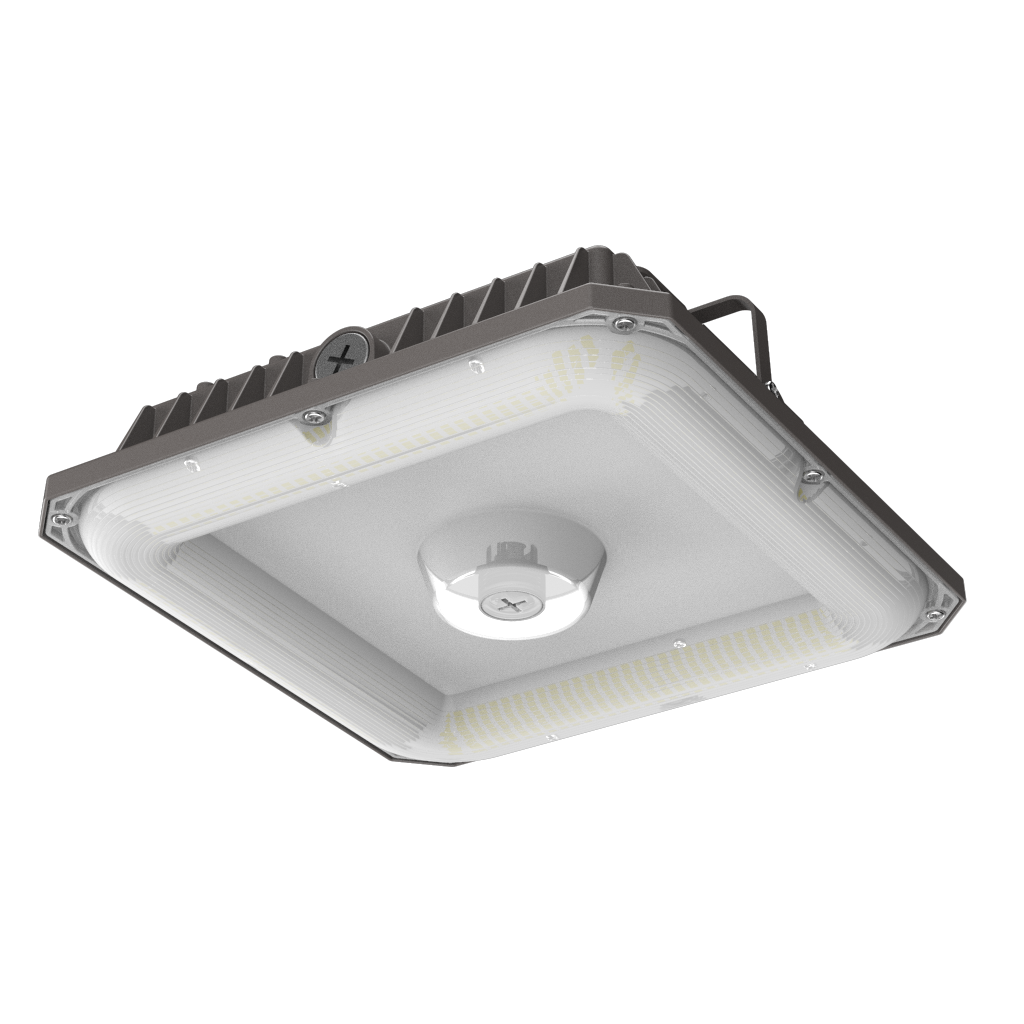
LED Wall Pack Housing — IP65
Standard commercial wall packs for building perimeters, pathways, and parking structures require IP65 as the minimum specification. IP65’s low-pressure water jet protection is fully adequate for rain and hose-down exposure. IP66 is available on request for car wash-adjacent or coastal installations. View the LED wall pack housing range.
LED Canopy Light Housing — IP54 to IP65
Gas station canopy lights are protected from direct rain by the canopy structure but subject to splash-back from pressure washing. IP54 is the minimum for sheltered positions; IP65 is recommended for all positions subject to pressure washing reach. View the LED canopy light housing range.
LED Street Light & Shoebox Housing — IP66
Pole-mounted street lights and parking lot shoebox fixtures face direct rain, vehicle spray, and pressure washing maintenance. IP66 is the correct specification. All Anerhui street light and shoebox housings are rated IP66 as standard. View the LED street light & shoebox housing range.
LED High Bay Housing — IP65
Indoor high bay fixtures in warehouse and factory environments require IP65. Food processing facilities require IP66. Cold storage requires IP65 with silicone gaskets rated to -40°C. View the UFO high bay housing range.
LED Garden & Landscape Light Housing — IP65 to IP67
Post-top garden lights in standard landscape applications require IP65. Ground-level fixtures in heavy rainfall zones require IP67. View the LED garden light housing range.
6. Coastal & Marine Waterproof LED Housing Specifications

For LED housings installed within 5 km of the ocean, specify the following coastal package:
- IP rating: Upgrade to IP66 minimum (even for standard IP65 applications)
- Surface treatment: E-coat primer + superdurable polyester powder coat — minimum 1,500 hours ASTM B117
- Hardware: Stainless steel A4 (316 grade) fasteners — not A2 (304 grade) standard
- Gasket: Silicone with Shore A 50–60 durometer
- Cable glands: Stainless steel or PA66-GF nylon glands — avoid brass glands in marine atmospheres
7. IP Testing: What to Request from Your Supplier
Valid IP Test Report Criteria
- ✅ Tested on fully assembled housing — gasket, lens, cable glands, fasteners all installed
- ✅ Photos in test report showing assembled fixture inside IP spray cabinet
- ✅ Third-party accredited laboratory — not self-tested by the manufacturer
- ✅ Test conducted per IEC 60529
- ✅ Thermal cycling validation — IP testing after 20 cycles of -25°C to +70°C
- ✅ Cable gland configuration stated in the report
Red Flags in IP Test Documentation
- 🚫 Test report shows bare casting without lens, gasket, or cable glands
- 🚫 No photos of the test assembly
- 🚫 Self-certified by manufacturer without third-party witness
- 🚫 No thermal cycling pre-conditioning before IP test
8. Long-Term IP Reliability: Why Housing Design Matters More Than Initial Testing
A waterproof LED housing that passes IP66 at the factory may degrade to effective IP54 performance within 3–5 years in the field — not because of manufacturing defects, but because of thermal cycling effects that gradually reduce gasket compression.
Thermal Cycling and Gasket Compression Loss
Every outdoor LED fixture cycles through temperature extremes daily. If the gasket material has a high compression set (permanent deformation under long-term load), each thermal cycle results in a small, permanent reduction in gasket compression. Over 3–5 years, cumulative compression loss can reduce effective IP rating from IP66 to IP54.
Silicone gaskets with low compression set (<20% after 70 hours at 150°C, ASTM D395) are specifically resistant to this degradation. This is why Anerhui specifies silicone gaskets on all waterproof LED housings.
9. Application Selection Guide
| Application | Min IP | Recommended IP | Gasket | Surface Treatment | Product |
|---|---|---|---|---|---|
| Indoor warehouse | IP54 | IP65 | Silicone | TGIC powder coat | High Bay |
| Outdoor wall pack | IP65 | IP65 | Silicone | TGIC powder coat | Wall Pack |
| Gas station canopy | IP54 | IP65 | Silicone | TGIC powder coat | Canopy Light |
| Street light / shoebox | IP65 | IP66 | Silicone | Superdurable powder coat | Street Light |
| Food processing washdown | IP65 | IP66 | Silicone FDA-grade | Epoxy + powder coat | High Bay IP66 variant |
| Coastal wall pack | IP65 | IP66 | Silicone Shore A55 | E-coat + superdurable | Wall Pack coastal spec |
| Cold storage -25°C | IP65 | IP65 | Silicone low-temp | TGIC powder coat | High Bay cold-rated |
| Ground-level landscape | IP65 | IP67 | Silicone | TGIC powder coat | Garden Light |
10. Frequently Asked Questions About Waterproof LED Housing
What is the difference between IP65, IP66, and IP67 LED housing?
IP65 provides complete dust protection and resistance to low-pressure water jets (12.5 L/min) — suitable for most outdoor commercial LED applications. IP66 adds resistance to powerful water jets (100 L/min) — required for street lights, parking lots, food processing, and coastal installations. IP67 provides dust protection plus temporary submersion to 1 meter for 30 minutes — required for ground-level landscape fixtures and marina lighting. All ratings must be tested on fully assembled housings.
What IP rating does an outdoor LED housing need?
IP65 is the minimum for most outdoor commercial LED applications including wall packs, garden lights, high bay fixtures, and canopy lights. IP66 is required for street lights, parking lot shoebox fixtures, food processing facilities, and any application with pressure washing or coastal exposure. IP67 is required for ground-level landscape fixtures in wet zones and marina lighting.
How does die-cast aluminum achieve IP65 to IP67 ratings?
Die-cast aluminum achieves IP65–IP67 through precision-machined gasket grooves at ±0.03 mm tolerance ensuring consistent silicone O-ring compression; IP-rated PG cable gland entries with sealed boss features cast directly into the housing; and precision parting line control eliminating flash gaps at mating surfaces. IP testing must be conducted on fully assembled housings.
What gasket material is best for waterproof LED housings?
Silicone (VMQ) is the standard gasket material — wide operating temperature range (-60°C to +200°C), excellent UV stability, and low compression set maintaining IP ratings over 15–25 year housing service lives. EPDM is acceptable for cold storage applications. Neoprene and nitrile rubber should be avoided for outdoor LED housings due to poor UV and ozone resistance.
Can IP-rated LED housings maintain their rating over 10+ years?
Yes, with proper housing design. Die-cast aluminum housings with silicone gaskets maintain IP65–IP66 ratings for 15–25 years with gasket groove dimensions at ±0.03 mm tolerance, silicone gasket at Shore A 40–60 durometer, stainless steel fasteners, and IP testing after thermal cycling validation (-25°C to +70°C, 20 cycles).
What surface treatment is needed for waterproof LED housings in coastal environments?
For coastal installations within 5 km of the ocean: e-coat + superdurable polyester powder coat achieving 1,500+ hours ASTM B117 salt spray resistance; stainless steel A4 (316 grade) fasteners; silicone gasket at Shore A 50–60 durometer; IP66 minimum rating. See our surface treatments guide for full coastal specification data.
Conclusion
Waterproof LED housing performance is determined by engineering decisions made long before the first fixture leaves the factory — gasket material selection, groove dimensional tolerances, cable gland boss design, surface treatment specification, and thermal cycling validation. An IP rating number on a datasheet is only as meaningful as the test conditions that produced it.
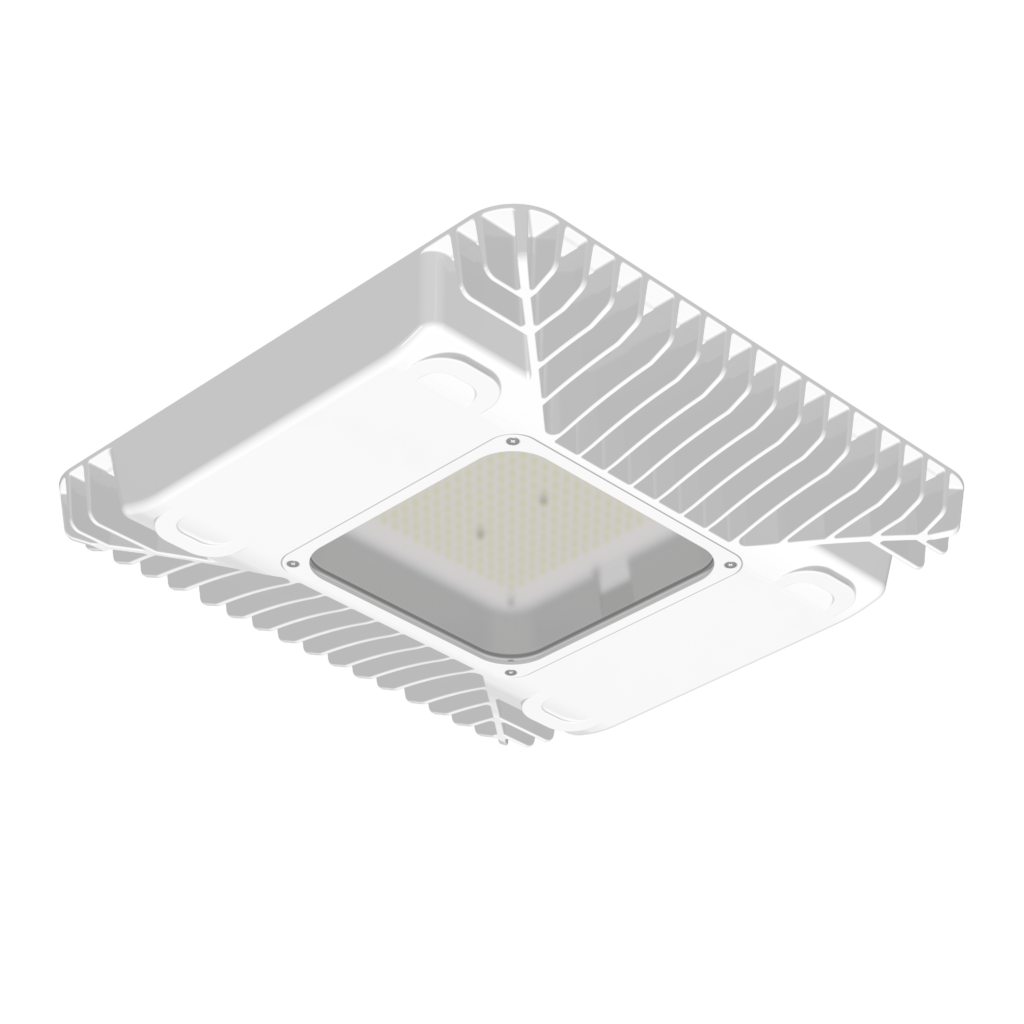
Anerhui’s die-cast aluminum LED housing range provides waterproof protection from IP54 through IP67 across wall packs, canopy lights, street lights, shoebox fixtures, high bay housings, and garden lights — all validated on fully assembled configurations with third-party IP testing and thermal cycling pre-conditioning.
Contact our engineering team to discuss waterproof specification for your application, request a free waterproof housing sample, or explore our complete waterproof LED housing catalog.
References & Further Reading
- IEC — IEC 60529 Ingress Protection Rating Standard
- ASTM International — ASTM B117 Salt Spray Testing
- Anerhui: Heat Dissipation LED Housing Guide
- Anerhui: LED Housing Surface Treatments Guide
- Anerhui: LED Housing Supplier Audit Guide
- Anerhui: Industrial LED Housing Solutions Guide
- Anerhui: LED Commercial Lighting Housing Guide