
By Anerhui Engineering Team | Last updated: May 2026 | LED light housing manufacturer die-cast aluminum LED housing LED housing SKD kit OEM LED housing Jiangmen lighting factory
📋 Table of Contents
- Why Manufacturer Selection Is a Strategic Decision
- Core Manufacturing Capabilities to Evaluate
- Quality Systems & Certification Requirements
- Thermal Engineering Capability
- Product Range: What a Full-Service Housing Manufacturer Should Offer
- Understanding the LED Housing SKD Kit Model
- MOQ, Lead Times & Scalability
- Where to Source: China LED Housing Manufacturing Hubs
- Why Lighting Brands Choose Anerhui
- Frequently Asked Questions
Selecting the right LED light housing manufacturer is one of the most consequential procurement decisions a lighting brand or commercial lighting distributor can make. The housing manufacturer determines not just the physical quality of your product — they determine its thermal performance, IP protection reliability, production consistency, and ultimately your warranty cost and customer satisfaction outcomes across thousands of installed fixtures.
Yet the global market for die-cast aluminum LED housings is fragmented and opaque. Hundreds of factories in China, Southeast Asia, and Eastern Europe supply LED housings at wildly varying quality levels, often at similar price points. Without a structured evaluation framework, procurement teams regularly discover post-shipment that supplier capability was misrepresented — whether in alloy composition, IP rating integrity, dimensional consistency, or thermal performance.
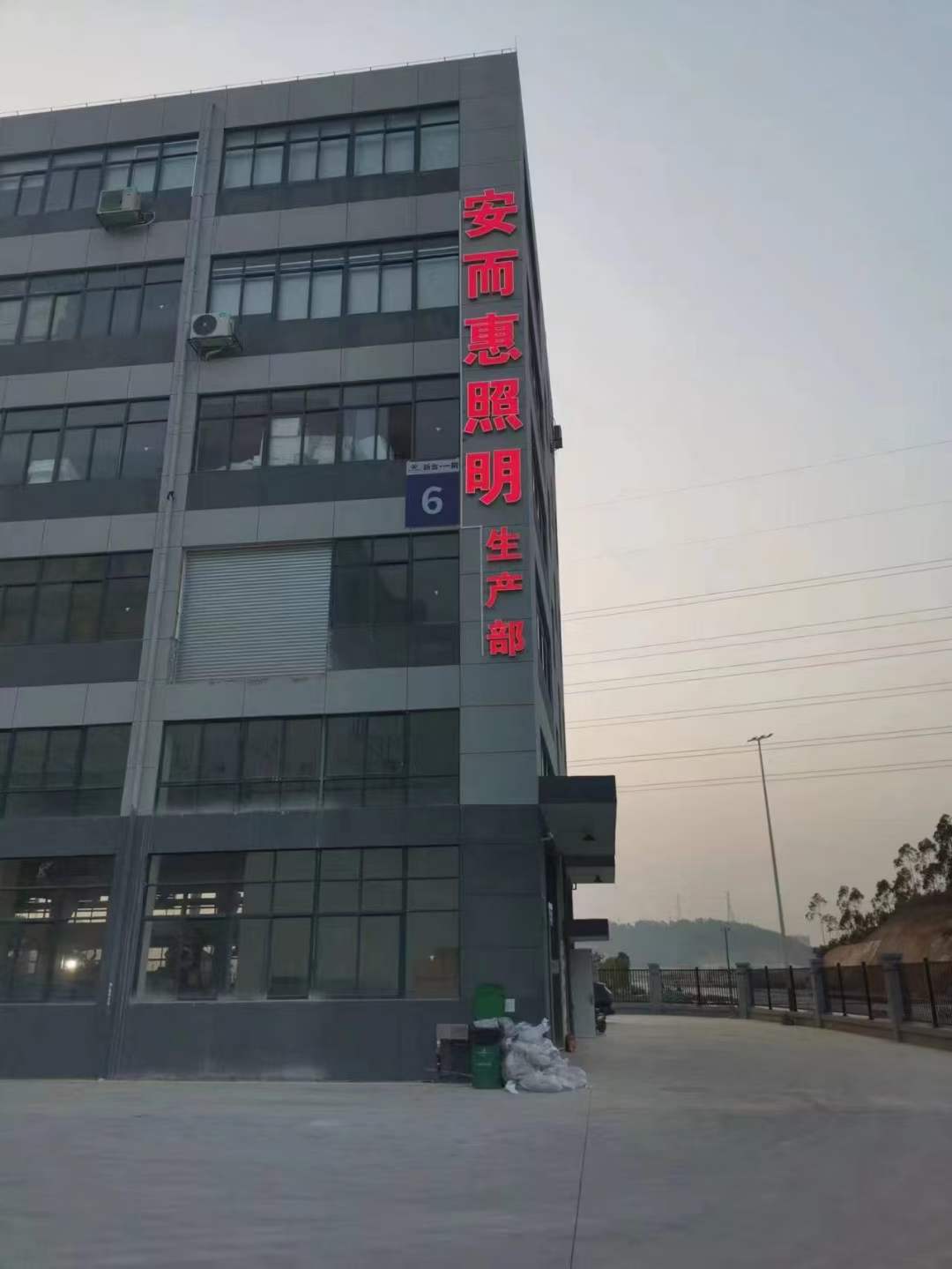
This guide provides a complete, engineering-grounded framework for evaluating and selecting a die-cast aluminum LED housing manufacturer — built from 15+ years of manufacturing experience at Anerhui Lighting Technology Co., Ltd., a professional LED light housing manufacturer based in Jiangmen, Guangdong, China. For technical context on die-cast aluminum housing performance, see our heat dissipation LED housing guide and smart LED housing design guide.
1. Why LED Housing Manufacturer Selection Is a Strategic Decision
For lighting brands building commercial product lines, the housing manufacturer is not a commodity supplier — they are a technical partner whose capabilities directly constrain your product’s performance ceiling. Consider the compounding effects of manufacturer quality across a typical commercial project:
- A housing with 5°C higher junction temperature due to suboptimal fin geometry reduces LED L70 lifetime by ~25%, increasing replacement frequency and warranty exposure.
- A housing with inconsistent gasket groove dimensions across a production batch compromises IP rating integrity, leading to field failures in outdoor installations within 2–3 wet seasons.
- A housing using unverified alloy substitution (A360 instead of A380, for example) may show 12–15% lower thermal conductivity and reduced corrosion resistance — effects that only become visible 18–24 months after installation.
- A manufacturer without in-house tooling capability adds 3–4 weeks to every design change cycle, slowing your product development roadmap and competitive response time.
The right manufacturer eliminates all of these risks before first shipment. The sections below provide the evaluation framework to identify them with confidence. For industry sourcing standards, the North American Die Casting Association (NADCA) and IEC publish procurement guidance applicable to LED housing qualification.
2. Core Manufacturing Capabilities to Evaluate
Die-Casting Machine Tonnage Range
The locking force of the die-casting machine (measured in tons) determines the maximum projected area of parts that can be produced. Mismatched machine tonnage — using a 280T machine for a part requiring 400T — results in flash defects, dimensional variation, and inconsistent fill of thin fin sections. Always verify that a supplier’s machine range matches your required part sizes. For reference:
| Machine Tonnage | Typical Max Projected Area | Suitable LED Housing Types |
|---|---|---|
| 200–280T | Up to ~400 cm² | Small wall packs, bulb housings, small canopy lights |
| 400–500T | Up to ~650 cm² | Mid-size UFO high bays (100W), street lights (100W) |
| 600–800T | Up to ~1,000 cm² | Large UFO high bays (200W+), large street lights (200W+), shoebox lights |
Anerhui operates die-casting machines at 280T, 400T, 600T, and 800T, covering the full commercial LED housing size range from compact wall packs to large high-bay and street light housings.
In-House Tooling Capability
The most important differentiator between professional LED light housing manufacturers and trading companies acting as intermediaries is in-house mold development. Suppliers with their own tool rooms can:
- Modify tooling within days rather than weeks when design issues are identified
- Maintain proprietary tool condition data and perform scheduled maintenance
- Guarantee tooling ownership and prevent unauthorized use of your molds
- Respond to DFM feedback during design review without subcontractor delays
Always ask prospective suppliers: “Where is the tooling made, and who owns it?” The answer reveals immediately whether you are dealing with a manufacturer or a middleman.
Secondary Operations
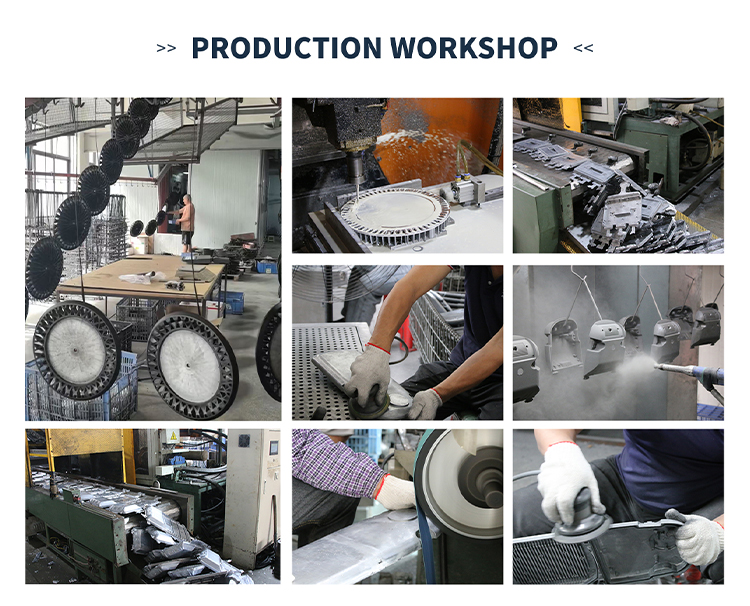
A full-service LED light housing manufacturer should offer secondary operations in-house, including CNC machining (for precision sealing surfaces, mounting threads, and optical datum faces), surface treatment (powder coating, anodizing, e-coat), deburring and edge finishing, and final assembly of SKD kits with gaskets, hardware, and cable glands. Outsourcing any of these operations introduces quality handoff risks and extends lead times.
3. Quality Systems & Certification Requirements
Quality certifications are a necessary but not sufficient indicator of manufacturer capability. The following framework distinguishes between baseline compliance and genuine quality system maturity.
| Certification / System | What It Confirms | How to Verify |
|---|---|---|
| ISO 9001:2015 | Documented quality management system; process control; corrective action capability | Request current certificate + last audit report; verify issuing body accreditation |
| In-house CMM inspection | Ability to measure critical dimensions to ±0.01 mm; First Article Inspection (FAI) capability | Ask for CMM measurement report on a sample part from your target product category |
| Alloy spectrometer | In-house verification of aluminum alloy composition; prevents substitution fraud | Request alloy composition certificate for last production batch; ask to witness spectrometer test on arrival |
| X-ray inspection | Detection of sub-surface porosity in structural and sealing-critical sections | Request X-ray images of a housing cross-section; look for evidence of porosity in LED mounting base and gasket groove areas |
| IP test facility | In-house IP65/IP66/IP67 spray and immersion testing per IEC 60529 | Request IP test reports with test fixture photos; confirm testing is performed on fully assembled configurations, not bare housings |
| RoHS / REACH compliance | Material composition compliance for EU and global export markets | Request material declaration sheets (IPC-1752A format) for housing alloy and surface finish materials |
Red flag: Suppliers who cannot provide alloy composition certificates or who claim ISO 9001 certification but cannot produce the certificate number and issuing body should be disqualified immediately. These are among the most common indicators of quality system gaps that lead to field failures. Use our LED housing supplier audit guide for a complete qualification scorecard.
4. Thermal Engineering Capability
Thermal performance is where the difference between professional LED light housing manufacturers and commodity producers is most clearly exposed. A manufacturer with genuine thermal engineering capability offers:
- CFD simulation: Computational fluid dynamics modeling of convective airflow around fin arrays, predicting junction temperature at specified drive current and ambient temperature before tooling is cut.
- Fin geometry optimization: Empirical knowledge of optimal fin height, pitch, thickness, and orientation for each product category and wattage range — not just copying competitor designs.
- Alloy recommendation: Guidance on alloy selection based on your specific wattage, ambient temperature, and wall thickness requirements — not defaulting to A380 for every application.
- Thermal validation: In-house temperature measurement capability to validate production prototypes against simulation predictions before first article approval.
For detailed technical background on LED junction temperature and its impact on lumen maintenance and service life, see our complete heat dissipation LED housing guide, which includes LM-80 / TM-21 lifetime projection methodology.
Anerhui thermal capability: Our engineering team provides CFD simulation reports showing predicted junction temperatures for every custom housing project — at no charge before tooling commitment. This service is standard for all new product development engagements. Request a thermal simulation consultation →
5. Product Range: What a Full-Service Housing Manufacturer Should Offer
A professional LED light housing manufacturer supplying the commercial outdoor and industrial lighting market should offer a comprehensive range covering the major fixture categories. Anerhui’s current product range includes all of the following, with both standard catalog and custom-tooled options:
| Product Category | Wattage Range | IP Rating | Key Applications |
|---|---|---|---|
| UFO LED High Bay Housing | 100W – 300W | IP65 | Warehouses, factories, logistics centers |
| LED Street Light Housing | 50W – 200W | IP66 | Roadways, parking lots, area lighting |
| LED Shoebox / Parking Lot Housing | 150W – 350W | IP66 | Large parking lots, sports courts, campuses |
| LED Canopy Light Housing | 40W – 300W | IP65 | Gas stations, covered parking, drive-throughs |
| LED Wall Pack Housing | 20W – 120W | IP65 | Building perimeters, security lighting |
| LED Barn Light Housing | 100W – 300W | IP65 | Agricultural, large outdoor area lighting |
| LED Garden Light Housing | 20W – 80W | IP65 | Parks, pathways, residential outdoor |
| LED Bulb Housing | 5W – 30W | IP44–IP54 | Retrofit bulb replacements, residential |
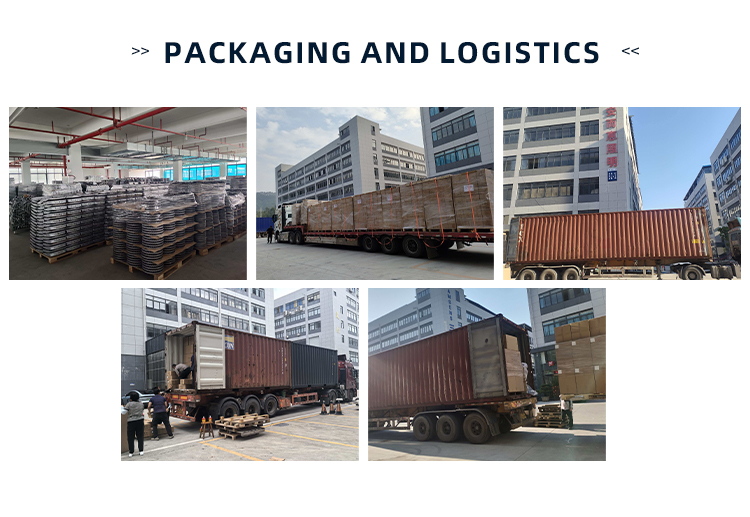
All product categories are available as standard catalog SKD kits or as custom-designed housings with private tooling. Multi-language export documentation is available in English, Spanish, Vietnamese, and Thai for Anerhui’s key export markets.
6. Understanding the LED Housing SKD Kit Model
The LED housing SKD (Semi-Knocked Down) kit model is the standard supply format between professional LED housing manufacturers and lighting brands worldwide. Understanding this model is essential for procurement teams evaluating suppliers.
📦 What a Standard Anerhui SKD Kit Includes
- Main die-cast aluminum housing body (powder coated or anodized)
- Tempered glass or polycarbonate lens / lens frame
- Silicone perimeter gasket (pre-installed)
- Stainless steel fasteners (M4–M8 depending on fixture size)
- IP-rated cable entry glands (PG type, quantity per fixture design)
- Mounting bracket or yoke (where applicable)
- Product label (CE, RoHS, wattage, IP rating)
- Packing: individual poly bag + foam insert + export carton
What the SKD kit does not include — and what the lighting brand supplies: LED module (COB, SMD array, or module), LED driver, reflector/optics (if not integrated), and internal wiring harness. This division allows lighting brands to source best-in-class LED packages and drivers independently while outsourcing the complex aluminum housing manufacturing to a specialist.
For smart-enabled products, Anerhui’s SKD kits can include Zhaga Book 18 sockets and antenna windows for wireless sensor integration. See our smart LED housing design guide for full specifications on IoT-ready SKD configurations.
7. MOQ, Lead Times & Scalability
Commercial LED lighting projects span a wide volume range — from 50-unit pilot installations to 50,000-unit smart city deployments. A professional LED light housing manufacturer must be able to support your business across this entire range, not just at the high-volume end.
| Order Type | Typical MOQ | Lead Time | Best For |
|---|---|---|---|
| Standard catalog SKD samples | 1–10 pcs | 3–7 days | Initial evaluation, client presentation samples |
| Standard catalog production order | 50–200 pcs | 2–3 weeks | Small projects, market testing |
| Custom design (existing tooling adapted) | 500–1,000 pcs | 4–6 weeks (tooling) + 2–3 weeks production | Brand-specific color, minor geometry changes |
| Custom design (new tooling) | 1,000–2,000 pcs | 6–10 weeks (tooling) + 2–4 weeks production | New product development, OEM private label |
| Blanket / annual supply agreement | 10,000+ pcs/year | Rolling 2–3 week production lead time | Large distributors, smart city projects, chain retail |
Scalability tip: Negotiate blanket order agreements with quarterly call-off schedules for predictable high-volume products. This locks in pricing, ensures production priority, and reduces per-unit shipping costs through optimized container loading. Anerhui supports blanket orders with flexible call-off terms for established customers. Discuss volume pricing with our sales team →
8. Where to Source: China LED Housing Manufacturing Hubs
The global center of gravity for die-cast aluminum LED housing manufacturing is Guangdong Province, China — specifically the Pearl River Delta region. This concentration exists because of decades of accumulated supply chain infrastructure: aluminum alloy traders, die-casting machine manufacturers, surface treatment specialists, toolmakers, LED component suppliers, and international freight logistics — all within 100 km of each other.
Key Manufacturing Clusters
- Jiangmen (Xinhui, Kaiping, Taishan): Emerging as the primary hub for outdoor LED housing manufacturing, with lower land and labor costs than Dongguan and Shenzhen while maintaining access to the Pearl River Delta supply chain. Anerhui is headquartered here.
- Zhongshan (Guzhen): Known as China’s “Lamp Capital,” Guzhen hosts thousands of lighting manufacturers and component suppliers — strong for decorative and indoor luminaires, increasingly relevant for commercial outdoor products.
- Dongguan: Long-established industrial base with strong precision die-casting and CNC machining capability, though labor costs have increased significantly since 2015.
- Foshan / Shunde: Strong in aluminum extrusion and fabrication; less dominant in die-cast housing specifically.
For global buyers, Jiangmen’s location offers efficient access to Guangzhou Nansha Port and Foshan Port, both of which serve major trans-Pacific and Asia-Europe shipping routes. Lead times from factory to FOB port are typically 1–2 days, enabling competitive total transit times to the USA, Europe, Southeast Asia, and the Middle East.
9. Why Lighting Brands Choose Anerhui as Their LED Housing Manufacturer
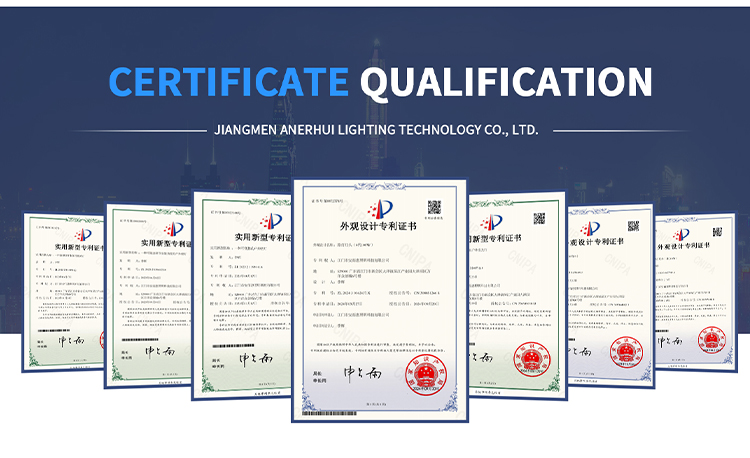
Anerhui Lighting Technology Co., Ltd. has been manufacturing die-cast aluminum LED housings since 2008, growing from a component factory in Shenzhen to a full-service LED housing SKD manufacturer with 11,000 m² of production space in Jiangmen. The following capabilities define why international lighting brands select Anerhui as their manufacturing partner:
🏭 Anerhui Manufacturing Capabilities at a Glance
- Founded: 2008 | Location: Jiangmen, Guangdong, China
- Facility: 11,000 m² production area
- Die-casting machines: 280T, 400T, 600T, 800T
- Monthly capacity: 30,000+ housing units
- Engineering team: 3 R&D engineers + 1 overseas resident engineer
- Product categories: 8 major commercial LED housing types
- IP ratings: IP54, IP65, IP66 — all tested in-house
- Export markets: North America, Europe, Southeast Asia, Middle East, Australia
- Languages: English, Spanish, Vietnamese, Thai documentation
- OEM / private label: Yes — custom color, logo, packaging
- Smart-ready housings: Zhaga Book 18, DALI-2, antenna windows
- Patents: Utility model + appearance patents on all original designs
Overseas Resident Engineer — A Unique Capability
One of Anerhui’s distinctive assets is a resident engineer based overseas, providing real-time insight into installation standards, electrical codes, and market-specific requirements in key export markets. This means that when you specify a housing for a US commercial project, Anerhui’s team understands the NEC wiring method requirements, UL listing implications, and local fixture installation practices — not just the product dimensions. This capability significantly reduces the design iteration cycles that typically accompany cross-border product development.
Full History of Customer Collaboration
Since 2008, Anerhui has developed partnerships with hundreds of lighting brands and distributors across North America, Europe, Southeast Asia, and the Middle East. This track record is reflected in the diversity and technical maturity of the product catalog — each housing design was developed in response to real market requirements from real customers, not speculative product planning. Contact Jamin Mo, Anerhui’s lead international sales engineer, to discuss your project requirements directly.
Ready to source from Anerhui?
Request free samples, get a volume quote, or start a custom housing development project — our engineering team responds within 24 hours.
📦 Request Free Samples | 📞 Contact Sales Team | 🔍 Browse Full Product Range
10. Frequently Asked Questions About LED Light Housing Manufacturers
What should I look for in an LED light housing manufacturer?
Key evaluation criteria include: in-house die-casting machines with appropriate tonnage range; in-house tooling/mold development; thermal engineering capability including CFD simulation; IP rating design and in-house testing (IP65–IP67); ISO 9001 quality management certification; secondary operations (CNC, surface treatment, assembly); in-house alloy spectrometer; and flexible MOQ for sample through high-volume orders. See our full supplier audit scorecard →
What is the typical MOQ for custom die-cast aluminum LED housings?
For standard catalog designs: 50–200 units with 2–3 week lead time. For custom designs with new tooling: 1,000–2,000 units with 6–10 weeks tooling + 2–4 weeks production. Anerhui offers prototype sample runs of 1–10 pieces for initial evaluation before any tooling commitment. Contact us to discuss MOQ for your project →
How long does it take to develop custom LED housing tooling?
Standard single-cavity tooling: 4–6 weeks from approved 3D data. Complex multi-cavity or smart-ready tools: 6–10 weeks. Anerhui’s in-house tool room (no outsourced tooling) enables 20–30% faster lead times and same-day design change response during the development phase.
What is an LED housing SKD kit?
An LED housing SKD (Semi-Knocked Down) kit is a complete set of die-cast aluminum housing components supplied to a lighting brand for assembly with their own LED modules, drivers, and optics. Standard SKD kits include the housing body, lens, gasket, fasteners, cable glands, and mounting hardware. The lighting brand supplies the LED module and driver, allowing independent optimization of both.
Where are the best LED light housing manufacturers located?
The global center of die-cast aluminum LED housing manufacturing is Guangdong Province, China — specifically Jiangmen, Zhongshan, and Dongguan in the Pearl River Delta. Jiangmen is emerging as the primary hub for outdoor commercial LED housing production, combining lower operating costs with full supply chain access and efficient port logistics. Anerhui is headquartered in Jiangmen’s Xinhui District.
Does Anerhui supply LED housings for private label / OEM projects?
Yes. Anerhui supports full OEM and private label programs including custom color finishes (any RAL), logo engraving or casting-in, custom packaging, and export documentation in your brand name. Our engineering team works with your product development team from initial DFM review through first article approval and production ramp. Contact us to start an OEM discussion →
Can Anerhui supply smart-ready LED housings with Zhaga sockets?
Yes. Anerhui manufactures smart-ready LED housing SKD kits with Zhaga Book 18 sockets, DALI-2 driver compartments, NFC antenna windows, and Bluetooth/Zigbee module cavities. These are available across the high bay, street light, canopy, and wall pack product categories. See our smart LED housing design guide for full technical specifications.
Conclusion
Choosing the right LED light housing manufacturer is a decision that compounds across every fixture you sell and every project your customers install. The right partner delivers consistent thermal performance, reliable IP protection, dimensional repeatability, and responsive engineering support — all of which translate directly into competitive product quality, reduced warranty exposure, and stronger customer relationships.
Anerhui Lighting Technology has been that partner for lighting brands across four continents since 2008. With in-house die-casting from 280T to 800T, complete secondary operations, thermal engineering capability, and a product range covering all major commercial outdoor LED housing categories, we are equipped to support your business from initial sample evaluation through large-volume OEM production.
Contact our team today to discuss your housing requirements, or explore our complete product catalog to find your starting point.
References & Further Reading
- North American Die Casting Association (NADCA) — Die casting process standards and design guides
- International Electrotechnical Commission (IEC) — IEC 60598 luminaire standards, IEC 60529 IP ratings
- The Aluminum Association — Alloy data sheets and selection guidance
- Anerhui: Heat Dissipation LED Housing Guide
- Anerhui: Smart LED Housing Design Guide
- Anerhui: Die-Cast Aluminum LED Housing Complete Guide
- Anerhui: How Die-Cast Aluminum LED Lights Are Made
© 2026 Anerhui Lighting Technology Co., Ltd. All rights reserved. | Privacy Policy | Sitemap | Blog
Anerhui Lighting Technology Co., Ltd. | Building 6, Wanyang Zhongchuang City, Shenjiang Industrial Park, Daze Town, Xinhui District, Jiangmen, Guangdong, China | Tel: +86 134 1118 5152